Don't worry, contact your boss immediately
Don't rush to close it, now, please talk to our boss directly. Usually reply within 1 hour.

John
JINAN SUNTEC CNC Machinery Co., Ltd
We Use SSL/3.0 To Encrypt Your Privacy

Meta Description: Which factories should use a 3-axis CNC router? A blunt, factory-floor answer for cabinet shops, sign makers, plastics plants, foam packaging lines, and panel furniture factories.
Excerpt: A 3-axis CNC router fits factories that cut flat sheets, panels, plastics, acrylic, foam, MDF, plywood, and light aluminum work. It’s not for every shop. But when your factory needs repeat cutting, cleaner holes, less handwork, and faster panel production, it can be the machine that pays back quietly.
Tags: CNC Router, 3-Axis CNC Router, CNC Factory Equipment, Panel Furniture CNC, Acrylic Cutting, Cabinet Production, SUNTEC CNC
Not every factory needs a 5-axis machine.
There. I said it.
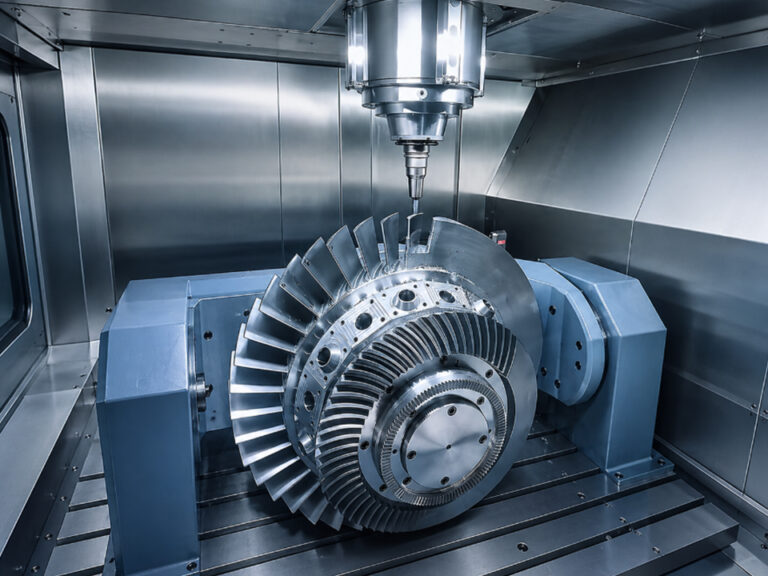
A lot of buyers get pulled into the “more axes means better machine” idea. It sounds smart in a meeting. It looks good in a catalog. But on the shop floor, many factories don’t need five axes. They need clean sheet cutting, stable drilling, accurate grooves, fast nesting, and fewer workers standing around with tape measures.
That’s where a 3-axis CNC Router makes sense.
A 3-axis CNC router moves in X, Y, and Z. Left and right. Front and back. Up and down. Simple? Yes. Weak? No.
For many factories, that’s enough. More than enough.
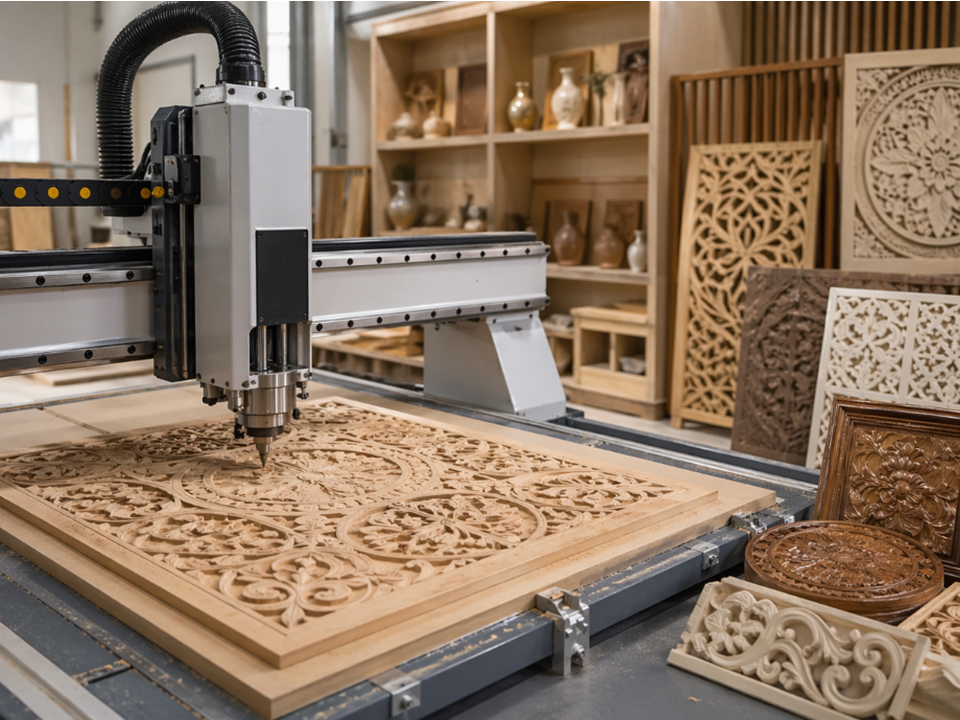
If your main work is cutting flat materials like MDF, plywood, acrylic, PVC, aluminum composite panel, HDPE, foam, or cabinet boards, a 3-axis CNC router may be the right machine. Not because it sounds advanced, but because it fits the job.
And fit matters more than pride.
A 3-axis CNC router loves flat work.
Cabinet sides. Door panels. Acrylic letters. Foam inserts. PVC signs. Wood boards. Office furniture parts. Plastic guards. Display stands. MDF grooves. Drilled holes. Repeated shapes.
That’s its comfort zone.
If your factory cuts sheet material every day, you should look closely at a 3 Axis CNC Router. The reason is simple: manual cutting eats time, and small mistakes stack up fast.
One wrong hole means one wasted panel. One bad groove means one cabinet doesn’t close right. One worker reading the wrong drawing means the whole batch gets delayed.
It happens.
A 3-axis CNC router helps by turning repeat work into programmed work. The machine follows the file. The operator loads the sheet. The spindle cuts, drills, grooves, and routes. The result is not magic. It’s control.
That’s what factories really buy.
Cabinet factories are the easiest case.
If you make kitchen cabinets, wardrobes, closets, office desks, hotel furniture, shelves, or panel furniture, a 3-axis CNC router is not a luxury. It’s close to basic equipment now.
Why?
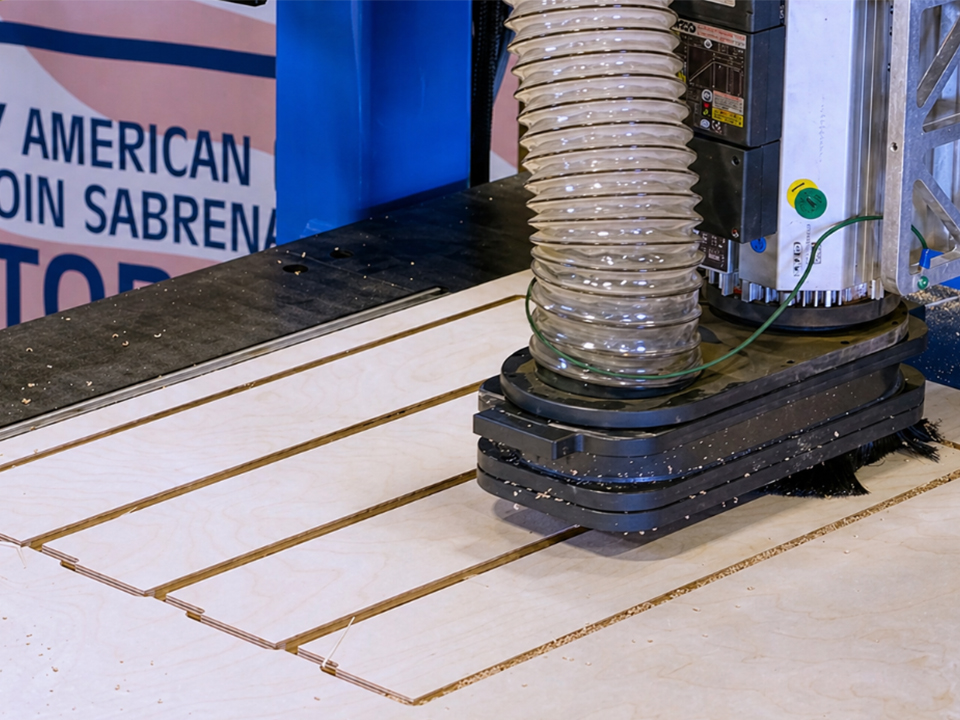
Because panel furniture depends on repeat holes, clean edges, and accurate dimensions. A cabinet side is not just a rectangle. It may need shelf holes, hinge holes, grooves, slots, labels, and edge prep. Doing that by hand may work for a small shop. But once orders grow, handwork becomes a trap.
Fast today. Expensive tomorrow.
A machine like the Automatic Tool Change Aggregated Nesting 3 Axis Wood CNC Router ST-2138 is built for this kind of factory. The listed setup includes a 5-zone vacuum table, 12-tool ATC, 80m/min travel speed, and ±0.025mm reposition accuracy. Those numbers matter because panel furniture work needs both speed and repeatability.
The 12-tool changer matters too. One tool cuts. One drills. One grooves. One mills. The operator doesn’t need to stop the machine every few minutes to swap bits by hand.
That’s how a cabinet line gets smoother.
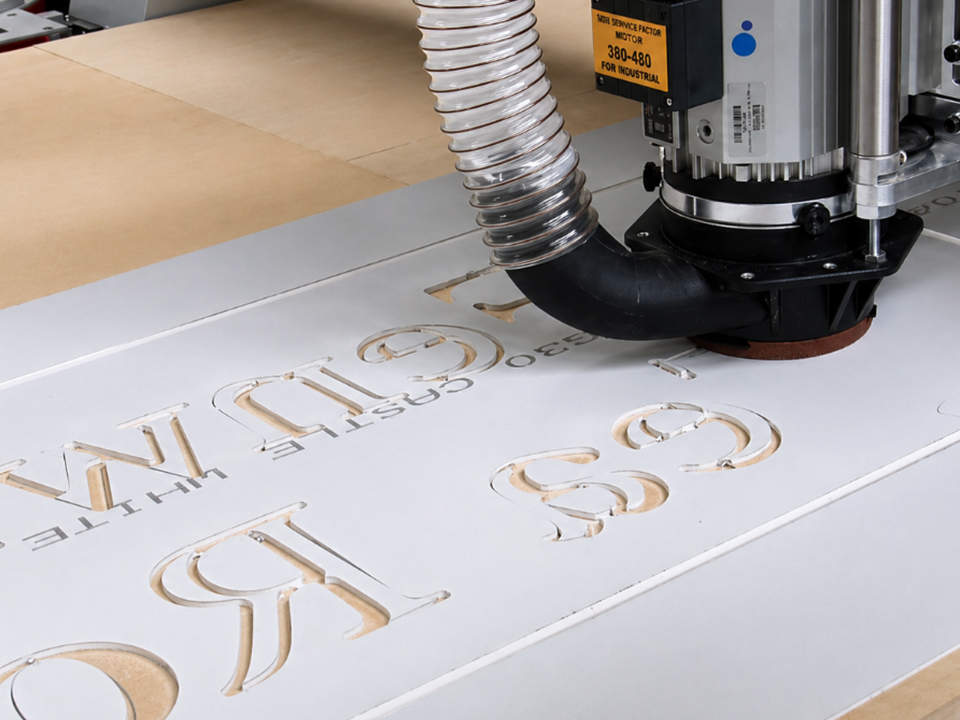
Sign factories should also pay attention.
Acrylic is unforgiving. MDF can hide a rough edge for a while. Acrylic can’t. Bad cuts show up under light. Melted edges look cheap. Poor drilling cracks the part. Weak hold-down causes chatter.
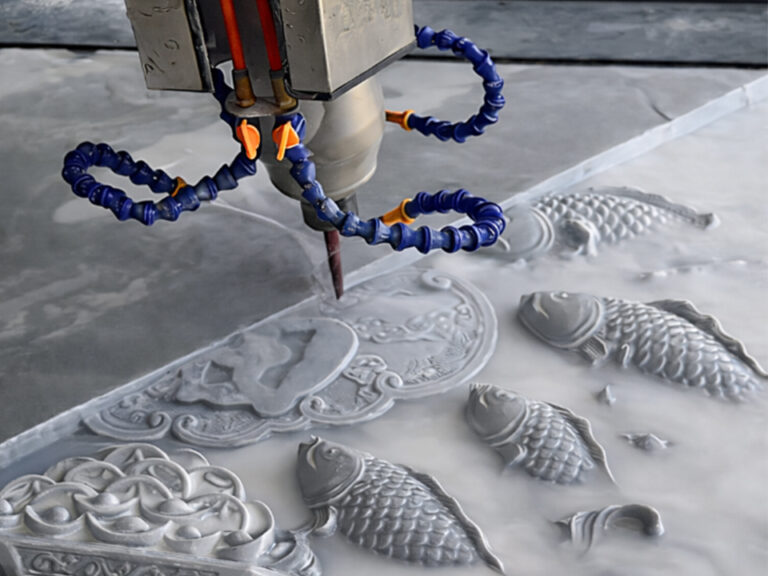
A 3-axis CNC router helps sign shops cut acrylic letters, PVC boards, aluminum composite panels, MDF signs, foam logos, light boxes, and display parts with better repeatability.
Is a laser better for some thin acrylic jobs? Yes.
But a router gives you more material range. It can cut thick acrylic, PVC, foam, wood, ACM, and some aluminum jobs. That flexibility matters for shops that don’t want one machine for every material.
A sign shop should consider a 3-axis CNC router if it handles:
| Sign factory work | Why 3-axis routing fits |
|---|---|
| Acrylic letters | Clean profiles and repeat shapes |
| PVC sign boards | Fast cutting and engraving |
| Aluminum composite panel | Stable routing and panel sizing |
| MDF display parts | Grooving, pocketing, cutting |
| Foam logos | Fast shaping with low cutting force |
| Retail displays | Slots, pockets, holes, and repeated panels |
This is not about buying the biggest machine. It’s about buying the machine that matches real orders.
If your sign shop mainly cuts vinyl film, don’t overbuy. If you cut rigid boards every week, the router starts to make sense.
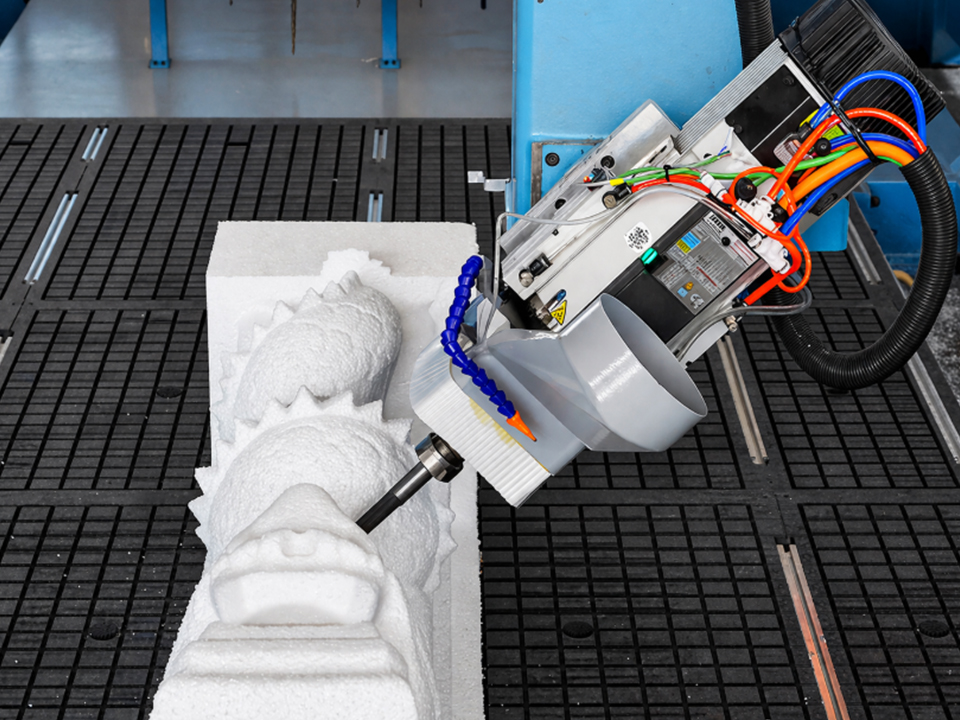
Foam looks easy until you try to make it repeat.
Packaging foam, EVA inserts, PE foam, PU foam, EPS, and EPE all have their own behavior. Some tear. Some melt. Some leave dust everywhere. Some need thick cutting. Some need clean cavities for tools, electronics, medical parts, or instruments.
A 3-axis CNC router can help here when the part is mostly top-cut. That means trays, pockets, inserts, simple molds, and flat foam boards.
For deeper mold work, the factory may need 4-axis or 5-axis equipment. SUNTEC also lists multi-axis options on its Products page, including machines for foam, molds, wood, aluminum, and complex shapes. That’s important because foam factories are not all the same.
A packaging factory may need simple 3-axis cutting.
An EPS mold factory may need 4-axis swing spindle work.
A car mold supplier may need more axis movement.
Don’t buy by machine name. Buy by part shape.
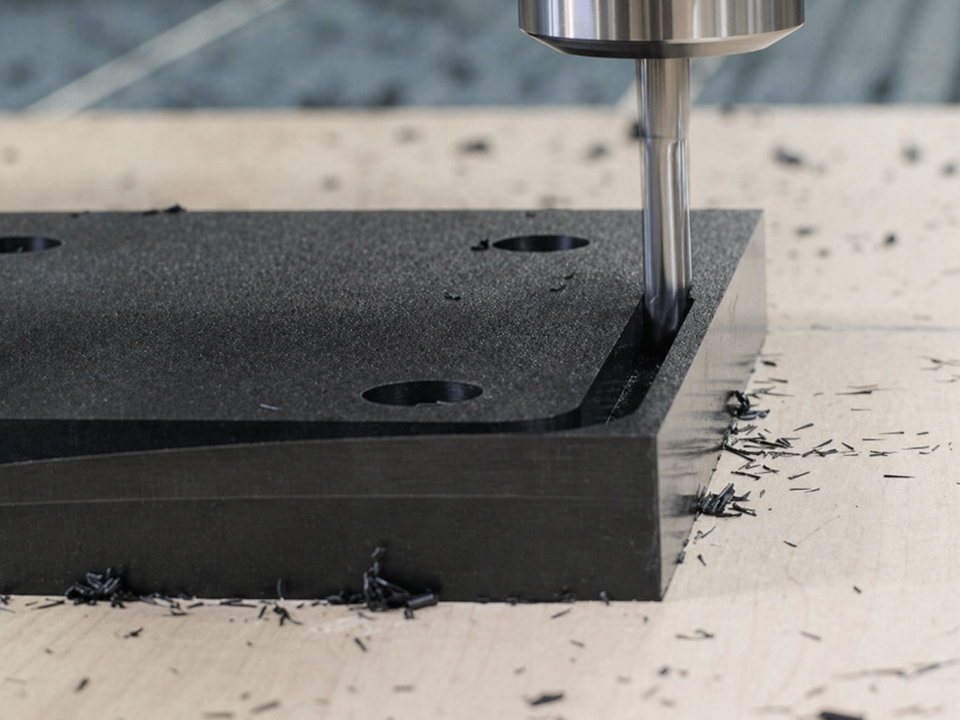
Plastic fabrication shops often live in the middle.
They don’t always need a metal mill. They don’t always need injection molding. They just need to cut, drill, pocket, and shape plastic sheets all day.
HDPE panels. PVC plates. Acrylic covers. ABS parts. Polycarbonate guards. UHMW strips. Machine shields. Tank parts. Trays. Spacers. Templates.
A 3-axis CNC router works well for that type of production.
But plastics are tricky. Feed too slow, and the tool rubs. Spindle too fast, and chips melt. Hold-down too weak, and the sheet moves. Dust extraction poor, and the shop gets messy fast.
So the machine matters, but the full setup matters more.
That includes spindle speed, vacuum table, tool choice, chip removal, operator training, and file preparation. A cheap setup can make a good material look bad. A stable setup can make plastic work feel routine.
That’s the point.
Routine makes money.
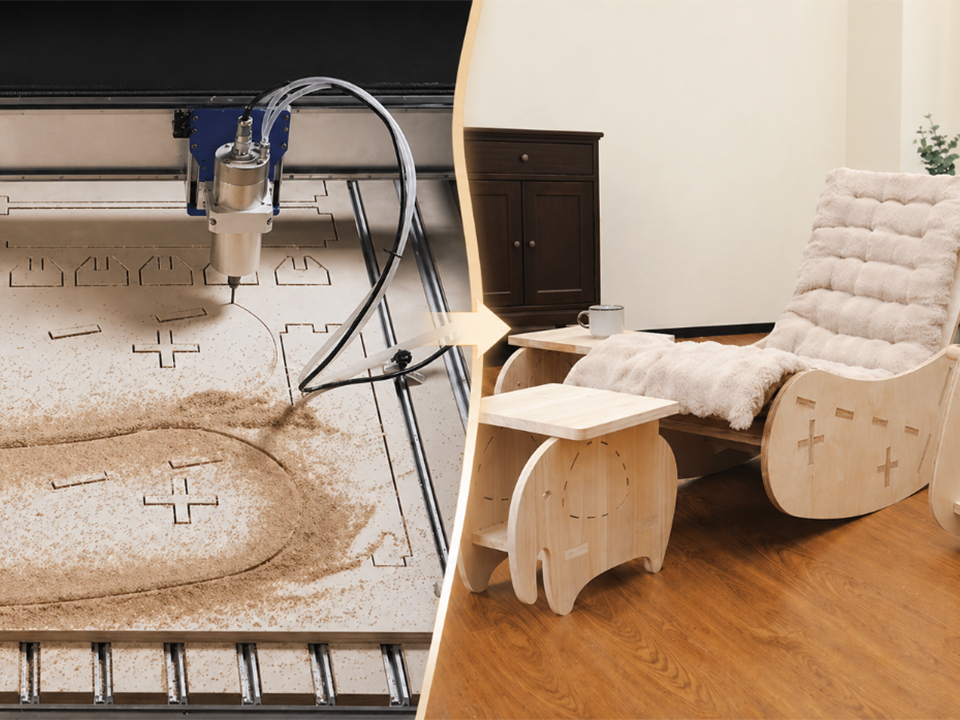
Office furniture factories are perfect users for 3-axis CNC routers.
Desks, partitions, storage cabinets, meeting tables, reception counters, workstations, and modular office panels all need repeatable drilling and cutting. The work may not look complex, but production volume makes it serious.
Three things matter.
Hole position. Panel size. Batch flow.
If those three are unstable, assembly becomes slow. Workers start adjusting parts by hand. Screws don’t line up. Drawers feel bad. Installers complain. Customers notice.
A 3-axis CNC router reduces that kind of mess.
For larger panel furniture plants, SUNTEC’s automatic loading unloading labelling nesting CNC router ST-2130 fits the bigger idea: less manual handling, better material use, and more flow from loading to nesting to drilling to unloading.
The listed 5-zone vacuum table, 12-tool ATC, 80m/min travel speed, and ±0.025mm precision are not just nice specs. They point to the real problem in furniture factories: moving sheets through production without losing time at every step.
One sheet is simple.
Five hundred sheets are not.
Small shops ask the wrong question all the time.
“Can I afford the machine?”
Better question: “Do I have enough repeat work to feed it?”
A 3-axis CNC router does not create orders. It processes orders. If your shop cuts one custom sign today, one odd table tomorrow, and one random prototype next week, you may not get full value from the machine yet.
But if your small shop has repeat cabinet parts, acrylic products, craft panels, wood signs, plastic covers, or furniture components, then yes, it may fit.
Start with your last 90 days of work.
Count the parts that were flat. Count the parts that needed repeated holes. Count the parts that were delayed by manual cutting. Count the parts that got remade because someone measured wrong.
If that number is high, you’re not buying a toy. You’re buying control.
Now let’s be honest.
Some factories should not buy a 3-axis CNC router.
If your work needs heavy steel cutting, deep metal pockets, undercuts, full 3D sculpting from many angles, or high-end aerospace-style multi-face machining, a 3-axis router may not be enough.
You may need a 4-axis CNC router, a 5-axis CNC router, a machining center, or a custom production line.
SUNTEC explains this difference in its article on 3-Axis vs. 5-Axis CNC Routers. The short version: 3-axis is strong for simpler and repeated flat work. 5-axis is better for complex geometry and multi-angle cutting.
That’s not a weakness. That’s machine selection.
A hammer is not bad because it can’t drill a hole.
| Factory type | Should use 3-axis CNC router? | Best materials | Main reason |
|---|---|---|---|
| Cabinet factory | Yes | MDF, plywood, particle board, HPL | Cutting, drilling, grooving, nesting |
| Panel furniture factory | Yes | Melamine board, MDF, plywood | Repeat holes and batch flow |
| Office furniture factory | Yes | Panel boards, laminates, plywood | Faster assembly and fewer errors |
| Sign factory | Yes | Acrylic, PVC, ACM, foam, MDF | Clean profiles and rigid board cutting |
| Plastic fabrication shop | Yes | HDPE, PVC, acrylic, ABS, PC | Repeat panels, guards, covers |
| Foam packaging factory | Yes | EVA, PE foam, PU foam, EPE | Inserts, pockets, trays |
| EPS mold factory | Sometimes | EPS, foam, wood molds | Good for simple top-cut shapes |
| Heavy metal factory | Usually no | Steel, titanium, hard alloys | Needs a milling machine instead |
| Complex 3D mold factory | Sometimes no | Foam, wood, resin board | May need 4-axis or 5-axis |
| Small custom workshop | Depends | Wood, acrylic, plastic | Works only with steady repeat jobs |
Here’s the part most factory owners care about.
Who builds the machine? Who supports it? Does the supplier understand your industry, or do they only ship boxes?
SUNTEC is not only selling one router model. The company lists 3-axis, 4-axis, 5-axis, wood, stone, metal, laser, plasma, machining center, lathe, and cutting solutions. On the About SUNTEC CNC page, the company says it was founded in 2006, has 300 employees, including 60 technical engineers, and operates across a 15,000㎡ area.
Those details matter.
Not because bigger always means better. It doesn’t.
But a factory buying CNC equipment needs engineering depth. You may need a different table size. You may need a stronger spindle. You may need automatic loading. You may need a 12-tool ATC. You may need a boring unit. You may need the supplier to understand cabinet production, acrylic cutting, mold work, or panel flow.
That’s where a wide product base helps.
A small trading company can sell a machine. A real CNC manufacturer can help match the machine to the job.
Don’t start with the price.
Start with your production.
Use this simple checklist before choosing a 3-axis CNC router:
| Question | Why it matters |
|---|---|
| How many sheets do you cut per day? | Shows if automation can pay back |
| What materials do you cut most? | Affects spindle, tools, and hold-down |
| What is your largest panel size? | Decides working area |
| Do you drill many holes? | May need boring head or ATC |
| Do you change tools often? | ATC may save real time |
| Do workers move panels by hand? | Loading and unloading may matter |
| What is your scrap rate? | Nesting may improve material use |
| Are your files clean? | CNC needs good CAD/CAM workflow |
This is where many buyers get exposed.
They want a machine quote, but they don’t know their material mix. They ask for “best price,” but they don’t know the real cost of rework. They compare spindle power, but they ignore vacuum strength.
That’s backwards.
A CNC router is part of a production system. Treat it that way.
Here’s my opinion.
A factory should use a 3-axis CNC router when the pain is repeated, flat, and measurable.
Repeated cutting. Repeated holes. Repeated grooves. Repeated panel sizes. Repeated worker mistakes. Repeated delays. Repeated scrap.
That’s the sweet spot.
If your factory keeps losing time on the same type of work, a 3-axis CNC router can help. If your work changes wildly every day and your files are a mess, fix the workflow first.
SUNTEC’s CNC Wood Router Machine with Automatic Feeding System ST-1530 shows the direction many factories are moving toward: loading, nesting, drilling, unloading, vacuum zoning, ATC, and less dependence on manual skill.
That’s not about replacing every worker.
It’s about moving skilled workers away from boring repeat jobs and into higher-value work.
Factories that cut flat sheets, panels, wood boards, acrylic, plastics, foam, and light aluminum parts should use a 3-axis CNC router. It fits cabinet factories, panel furniture plants, sign shops, plastic fabrication shops, foam packaging factories, and office furniture makers that need repeatable cutting, drilling, grooving, and nesting.
Yes, a 3-axis CNC router is often enough for cabinet production because most cabinet parts are flat panels that need cutting, drilling, grooving, and hinge-hole processing. With ATC, vacuum zones, and nesting software, it can handle daily cabinet and wardrobe production with much less manual measuring.
Yes, a 3-axis CNC router can cut acrylic signs, letters, panels, and display parts when the shop uses the right tool, spindle speed, feed rate, and hold-down. It works especially well for thicker acrylic and mixed-material sign production involving PVC, ACM, MDF, and foam.
A metal factory should buy a 3-axis CNC router only for light non-ferrous work, such as aluminum sheets or aluminum composite panels. For steel, titanium, deep pockets, and high-force metal cutting, a CNC milling machine or machining center is usually the better choice.
A factory should choose 5-axis instead of 3-axis when parts need complex curves, undercuts, angled surfaces, multi-side cutting, or fewer setups for advanced 3D shapes. For flat panels and repeated sheet work, 3-axis is often simpler, cheaper to run, and easier to train.
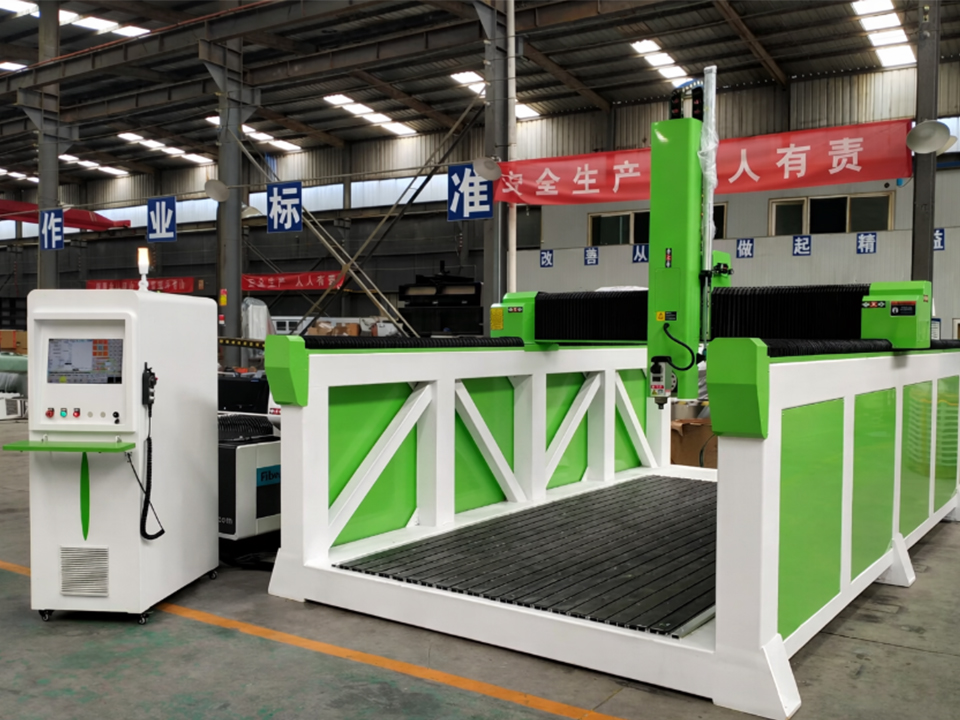
A 3-axis CNC router is not the fanciest machine in the room.
Good.
Factories don’t make money from fancy. They make money from stable output, clean parts, fewer mistakes, better material use, and faster delivery.
If your factory cuts boards, panels, acrylic, plastic, foam, signs, cabinets, or office furniture parts every week, a 3-axis CNC router deserves a serious look. If you need automatic tool changing, loading, unloading, nesting, drilling, or higher production flow, SUNTEC has machines built around those needs.
Start with your real parts. Send your material, size, thickness, daily output, and sample drawings to SUNTEC CNC. Ask for a machine match based on your production, not a random catalog recommendation.
That’s how you avoid buying too much machine.
And it’s how you avoid buying too little.