Don't worry, contact your boss immediately
Don't rush to close it, now, please talk to our boss directly. Usually reply within 1 hour.

John
JINAN SUNTEC CNC Machinery Co., Ltd
We Use SSL/3.0 To Encrypt Your Privacy

Automotive mold making looks clean in CAD.
In the workshop, it gets messy fast.
A car bumper mold may look like one smooth part, but the toolpath tells another story. There are long curves, side surfaces, deep edges, draft angles, and soft transitions. A dashboard mold brings more trouble. So does a fiberglass body mold, an EPS foam plug, a carbon fiber mold, or a plastic mold prototype.
This is why many mold shops move from simple 3-axis machines to 4-Axis CNC Routers. They don’t do it to look modern. They do it because they’re tired of stopping the job, flipping the material, finding zero again, checking the surface, and then fixing small errors by hand.
That’s the real argument.
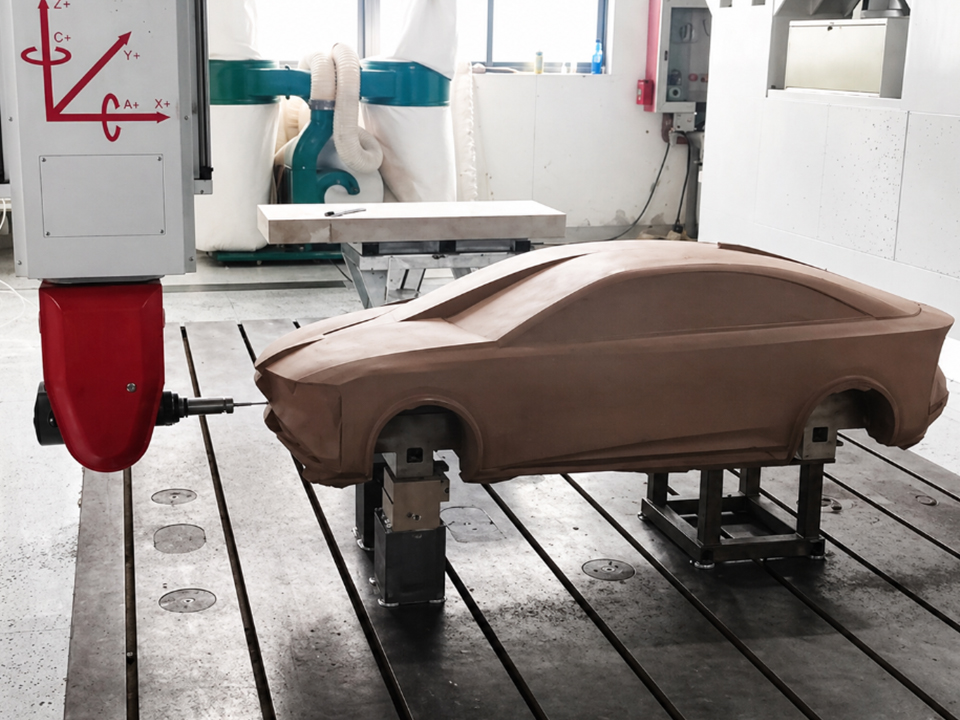
A 4-axis CNC router helps the cutter reach more surfaces in one setup. The spindle can move at better angles. The operator touches the mold less. The job stays more stable.
In automotive mold making, that can save a lot of pain.
Let’s start with the big one.
Fewer setups.
Every time you move a mold blank, you add risk. Maybe the material shifts a little. Maybe the second zero point is not perfect. Maybe the clamp pressure changes. Maybe the operator checks twice but still loses 0.5 mm on a long surface.
That may not sound huge. On a car mold, it can become a real problem.
A 4-axis CNC router reduces that risk because it can cut angled and curved surfaces without as much manual repositioning. The spindle can rotate 180 degrees, or ±90 degrees, on many SUNTEC 4-axis mold machines. That helps the machine work around the part instead of forcing the team to move the part again and again.
The 4 axis CNC router car mold ST-2050 shows this clearly. It has a 2000 x 5000 x 1000 mm working area, a 9.6 kW HSD spindle, Syntec control, Yaskawa servo motors, and a large steel tube frame. It’s built for large mold jobs, not small decorative cutting.
For car mold shops, size matters. A small table can become a problem on the first large bumper, dashboard, roof mold, or body panel plug.
Surface finish is where mold shops lose quiet money.
The machine finishes the job. Then the sanding starts. Then more sanding. Then checking. Then filling. Then polishing. People call it normal, but sometimes it’s just poor machining showing up later.
A 4-axis CNC router helps because the tool can approach the surface from a better angle. That means less tool stretch, less chatter, and better contact on curved areas.
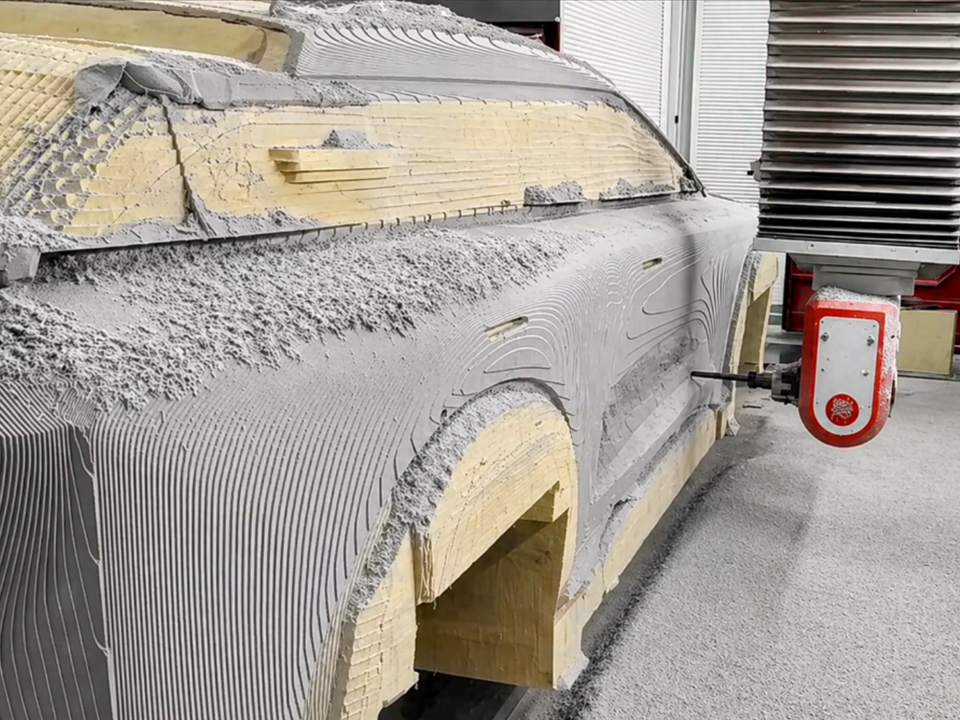
Think about an EPS foam car body plug. The top surface may be easy. The side shape is the hard part. A 3-axis router may need longer tools or extra setups. A 4-axis router can reach more of that side surface with better control.
The 4 Axis 3D Mold EPS CNC Router ST-2030 is made for this kind of work. It uses a 180-degree rotating HSD spindle, Yaskawa servo motors, Syntec control, and a hardened steel structure. It also lists 40 m/min high speed and ±0.01 mm precision.
That mix matters.
Speed alone is not enough. A fast but weak machine just makes bad cuts faster. Mold work needs speed, yes, but it also needs control.
A car mold shop may cut EPS foam in the morning and dense tooling board in the afternoon. Another shop may cut fiberglass molds, plastic molds, carbon material molds, or aluminum mold parts. Each material behaves differently.
EPS foam cuts fast, but dust becomes a problem. Fiberglass needs careful extraction. Carbon material needs the right cutter and stable motion. Aluminum needs a strong frame, proper feed rate, and good chip control. Hardwood and dense boards need torque and stiffness.
That’s why machine structure matters so much.
The 4 axis CNC router foam styrofoam EPS mold ST-1325 works well for smaller foam mold and model jobs. It has a 1300 x 2500 x 1000 mm working area, a 9.6 kW HSD spindle, 0–24000 RPM spindle speed, Syntec control, and Yaskawa servo motors.
For larger mold work, the ST-3040 4-axis CNC router with 180-degree rotary spindle gives a 3000 x 4000 x 1000 mm working area. That larger format fits big 3D molds, wood molds, foam molds, ship molds, aviation molds, and large automotive-related forms.
Pick the machine by the mold, not by the brochure.
Some buyers think more axes always mean better work.
Not always.
A 5-axis CNC router can handle very complex parts, deep undercuts, and more tool-angle control. But it also costs more, needs stronger CAM skill, and may be more than a normal mold shop needs for daily EPS, fiberglass, plastic, and carbon mold work.
A 3-axis CNC router still makes sense for flat sheets, simple boards, and basic roughing. But once the job needs side access, curved surface control, and fewer manual setups, 3-axis starts to show its limits.
A 4-axis CNC router sits in the middle. For many automotive mold makers, that middle position is the sweet spot.
| Comparison Point | 3-Axis CNC Router | 4-Axis CNC Router | 5-Axis CNC Router |
|---|---|---|---|
| Best fit | Flat boards, simple cuts | Car molds, EPS molds, fiberglass molds, plastic molds, 3D foam models | Deep undercuts, very complex multi-angle work |
| Setup count | Higher | Lower | Lowest |
| Programming difficulty | Easier | Medium | Higher |
| Machine cost | Lower | Medium | Higher |
| Mold surface access | Limited | Strong | Very strong |
| Operator workload | More repositioning | Less repositioning | More CAM planning |
| Best buyer | Sheet and panel shop | Mold shop with curved parts | Advanced machining shop |
This is why I like 4-axis machines for automotive mold making. They solve the problems most shops face every week without forcing every buyer into the price and training load of full 5-axis machining.
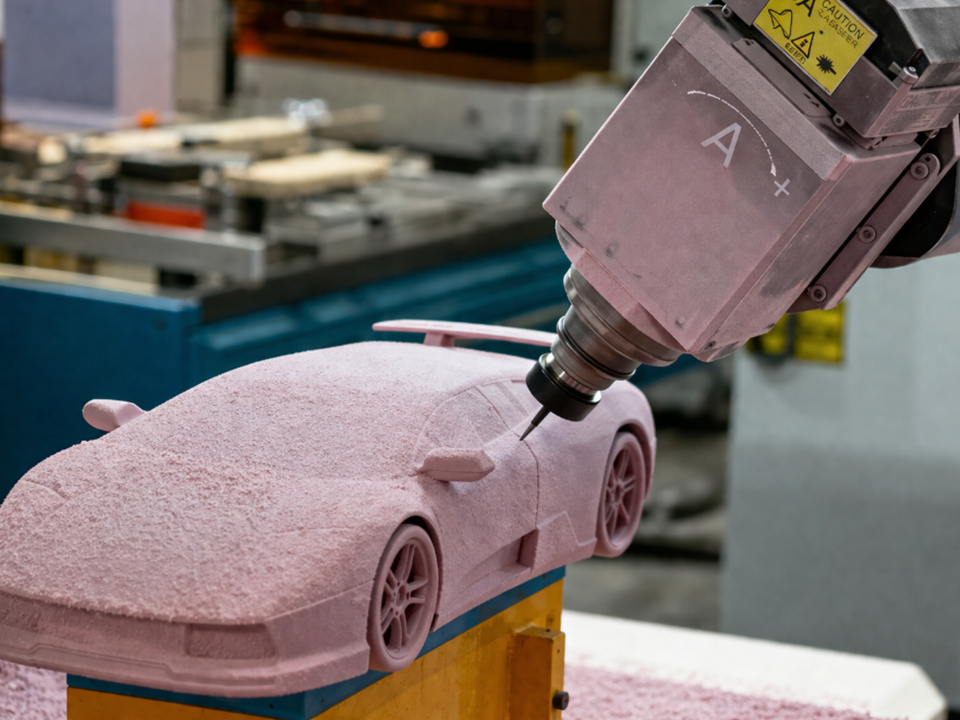
A full-size car body plug needs smooth flow from front to back. The shape can be long, wide, and tall. A 4-axis router helps rough the foam quickly and finish side surfaces with fewer stops.
For this job, a large working area matters. So does spindle rotation. The operator wants less flipping, fewer manual marks, and a cleaner shape before sealing and coating.
Fiberglass mold work often has curved surfaces and edge areas that a straight 3-axis toolpath cannot reach cleanly. A 4-axis spindle helps cut the shape with better access.
This reduces hand repair. It also helps keep both left and right sides more consistent.
Carbon fiber mold work needs stable cutting. The material can be unforgiving. If the frame vibrates or the tool angle is poor, the surface suffers.
A hard steel structure, quality linear rails, and servo motors matter here. SUNTEC 4-axis mold machines use components such as HSD spindles, Syntec control, Yaskawa servo motors, Delta inverters, and Hiwin linear systems across different models.
These parts don’t make a machine good by name alone. But they do show the machine was built for real industrial work, not light-duty engraving.
Plastic molds and non-metal 3D models often need clean edges, smooth surfaces, and repeatable detail. A 4-axis CNC router can handle curved surfaces better than a simple 3-axis setup.
For prototype shops, this is useful because design changes come fast. The machine must cut the next version without turning every change into a fixture rebuild.
Here’s a simple table based on SUNTEC 4-axis mold router models.
| Model | Working Area | Spindle | Speed / Accuracy | Best Fit |
|---|---|---|---|---|
| ST-1325 | 1300 x 2500 x 1000 mm | 9.6 kW HSD, 180-degree rotary | 30000 mm/min working speed, ±0.01 mm repositioning accuracy | EPS foam molds, smaller automotive models, non-metal 3D molds |
| ST-2030 | 2000 x 3000 x 1000 mm | 180-degree HSD spindle | 40 m/min, ±0.01 mm precision | EPS molds, wood molds, aluminum mold making, 3D foam |
| ST-2050 | 2000 x 5000 x 1000 mm | 9.6 kW HSD, 180-degree rotary | 40000 mm/min rapid travel, 30000 mm/min working speed | Large car molds, carbon material molds, fiberglass molds |
| ST-3040 | 3000 x 4000 x 1000 mm | 180-degree rotary spindle | ±0.01 mm precision | Large 3D molds, wood molds, foam molds, ship and aviation mold work |
The point is simple. Automotive mold buyers should not only ask, “What is the price?”
Ask this instead: “Which working area fits my largest mold?”
That one question can save months of frustration.
SUNTEC CNC has produced CNC equipment since 2006. The company makes 3-axis, 4-axis, and 5-axis CNC routers, as well as laser machines, plasma cutters, machining centers, lathes, and oscillating knife cutting machines. You can read more on the SUNTEC About page.
For mold buyers, this matters because automotive mold work is not one-size-fits-all. Some shops need a large table. Some need heavy Z height. Some need 180-degree spindle rotation. Some need cooling. Some need dust collection. Some need stronger servo systems.
SUNTEC’s CNC router product range includes several mold-focused machines, so buyers can match the machine to their work instead of forcing their work into a standard layout.
That’s the better way to buy.
Send the mold size. Send the material. Send the target surface. Send the tolerance goal. Then build the machine plan around the job.
This mistake hurts. A shop saves money on table size, then loses money because the next mold doesn’t fit well.
Automotive molds are often bigger than expected. Leave room.
A strong spindle helps, but it’s not the full story. Frame strength, guide rails, servo motors, controller quality, and Z-axis stability matter too.
Foam and fiberglass create dust. Carbon material needs care. Aluminum needs chip control. A clean process protects the machine and the operator.
A 4-axis CNC router needs good programming. PowerMill, Mastercam, UG, and proper post-processors can make a big difference. The machine must match the software workflow.
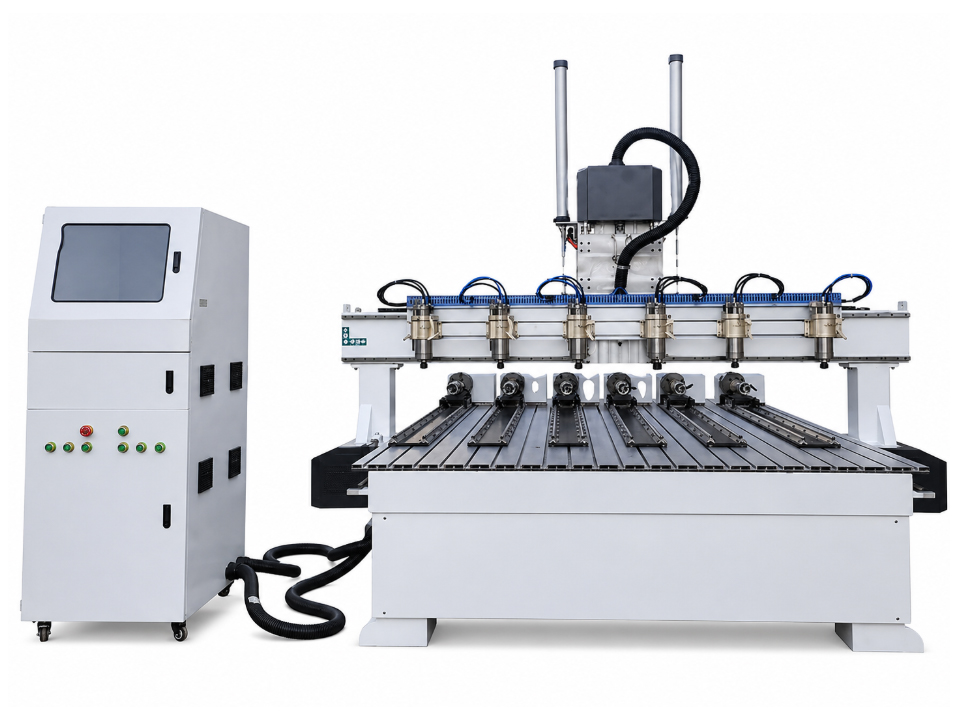
4-Axis CNC Routers help automotive mold shops because they attack the boring problems that cost real money.
Too many setups. Too much hand finishing. Too much repositioning. Too many small errors. Too much time lost between cuts.
A good 4-axis CNC router gives the cutter better access to curved surfaces. It helps keep large molds stable. It supports EPS foam, fiberglass, carbon material, plastic molds, wood molds, aluminum mold parts, and non-metal 3D model work. It also gives mold shops a strong middle path between basic 3-axis routing and full 5-axis machining.
If your shop makes car molds, foam plugs, fiberglass molds, or large 3D automotive models, start with the SUNTEC 4-Axis CNC Router category. Compare the ST-1325, ST-2030, ST-2050, and ST-3040. Then choose by mold size, material, spindle needs, and real production flow.
For a custom machine plan, send your drawings, mold size, material, and cutting needs through the SUNTEC contact page. Ask for a machine recommendation based on your real automotive mold work, not a rough guess.