Don't worry, contact your boss immediately
Don't rush to close it, now, please talk to our boss directly. Usually reply within 1 hour.

John
JINAN SUNTEC CNC Machinery Co., Ltd
We Use SSL/3.0 To Encrypt Your Privacy

Yes, but don’t buy the slogan.
A 5-Axis CNC Router can make high-precision parts when the job fits the machine: large molds, composite parts, foam models, wood shapes, plastic parts, aluminum molds, aerospace-style curved surfaces, and complex parts that need cutting from more than one angle.
But here’s the hard truth. Five axes don’t automatically mean high precision. A weak frame with five axes is still weak. A poor spindle with five axes is still poor. Bad fixturing, bad CAM, and bad tool setup will still ruin the part.
So the better question is not: “Can a 5-axis CNC router make precision parts?”
The better question is: “Can this machine hold the tolerance my part needs, in my material, at my size, day after day?”
That’s where Suntec CNC deserves a closer look. Suntec doesn’t only sell the idea of 5-axis machining. It builds real machines around the parts shops actually make: molds, furniture components, composite parts, foam models, aerospace shapes, and custom industrial work. You can see this clearly in the Suntec CNC Router product range, where 3-axis, 4-axis, 5-axis, nesting, and automation machines sit under one roof.
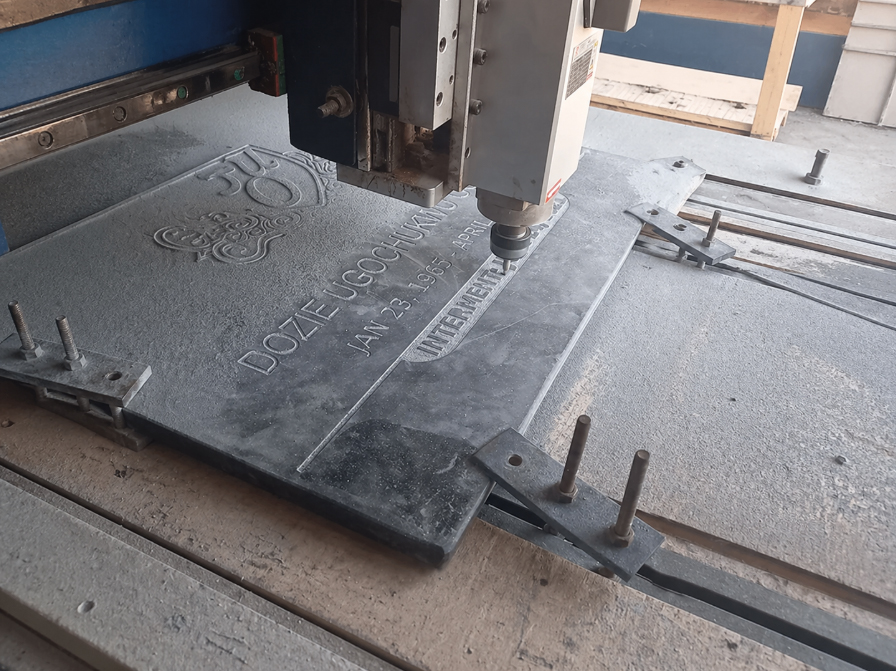
Most precision problems start before the cutter touches the material.
You clamp the part once. Then you move it. Then you flip it. Then you reset zero. Then the error sneaks in.
That’s why 5-axis machining matters. The cutter can approach the workpiece from different angles without forcing the operator to keep moving the part. Less repositioning means less human error. It also means cleaner surfaces, better part matching, and faster production.
Small detail. Big result.
For complex shapes, this can decide whether a shop makes money or burns hours fixing mistakes. A 3-axis router works well for flat panels, cabinet parts, signs, and simple pockets. But once the part has deep curves, angled holes, undercuts, or sculpted surfaces, a 3-axis machine starts asking for compromises.
A 5-axis router removes many of those compromises.
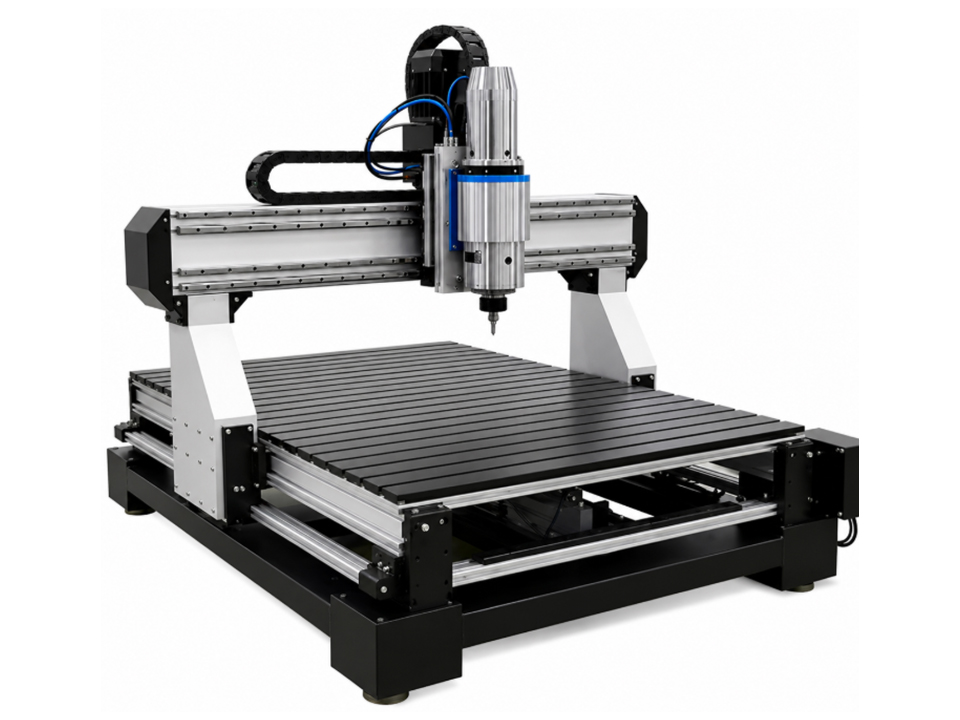
Suntec’s 5-Axis CNC router woodworking CNC machine center ST-2030 is built around this idea. It offers a 2000 × 3000 × 1000 mm working capacity, ±110° A-axis rotation, ±245° C-axis rotation, a 24,000 RPM HSD spindle, Yaskawa motors, and a heat-treated 12–20 mm steel frame. Those numbers matter because precision doesn’t come from software alone. It comes from the full machine body.
A 5-axis CNC router shines when the part is large, curved, light-cutting, or hard to reach with a straight vertical spindle.
Think about these jobs:
These parts don’t always need the same tolerance as a watch gear or medical screw. But they do need smooth surfaces, correct geometry, clean edges, and strong repeatability.
That’s exactly the type of work where a 5-Axis CNC Router can beat a normal 3-axis router.
Take mold making. A mold may look simple from far away, but the surface tells the truth. If the tool marks are rough, the final product shows it. If the left side and right side don’t match, assembly becomes painful. If a curved area needs hand sanding for hours, the machine didn’t really save you money.
This is why Suntec’s 5-axis and 4-axis machines often focus on mold work. The 4 Axis 3D Mold EPS CNC Router for foam, wood, and aluminum mold making uses a 180° rotating HSD spindle, Yaskawa motors, Syntec control, Hiwin linear parts, and a 2000 × 3000 × 1000 mm working area. For shops that don’t need full 5-axis movement on every job, that kind of 4-axis setup can also make sense.
I don’t trust the word “precision” when it floats by itself.
Precision of what?
Cutting edge? Hole center? Surface finish? Repeatability? Flatness? Toolpath accuracy? Final measured part after cooling? These are not the same thing.
A machine can cut a smooth surface and still miss a hole location. It can repeat well on wood and struggle on aluminum. It can look strong in a showroom and chatter under real load.
That’s why you should judge a 5-axis router by the whole stack:
| Precision Factor | Why It Matters | What to Check |
|---|---|---|
| Frame strength | A weak frame moves during cutting | Heat-treated steel frame, heavy structure |
| Spindle quality | Runout affects edge quality and small details | HSD spindle, RPM range, tool holding |
| Servo system | Poor motion control creates marks and drift | Yaskawa servo motors, matched drives |
| Guide rails | Bad motion creates poor repeatability | Hiwin rails, proper installation |
| Controller | 5-axis motion needs stable control | Syntec, OSAI, or similar industrial control |
| Workholding | The part can move before the machine misses | Vacuum table, T-slot table, custom fixture |
| CAM software | Bad toolpaths ruin good machines | PowerMill, Mastercam, UG compatibility |
| Material | Some materials cut cleanly; some fight back | Foam, wood, plastic, composite, aluminum |
This is where Suntec’s machine design gives buyers something real to judge. On its product pages, Suntec lists the machine parts clearly: HSD spindle, Yaskawa motors, Syntec control, Delta inverter, Hiwin linear parts, separate control cabinet, steel frame, and large working areas. Those aren’t decoration words. Those parts affect daily cutting.
Here’s my position.
A 5-Axis CNC Router is suitable for High-Precision Parts when the part needs complex shape control more than heavy metal-cutting force.
That sentence matters.
If you’re cutting aerospace foam molds, carbon fiber trim tools, hardwood molds, plastic fixtures, aluminum mold surfaces, or sculpted furniture parts, a strong 5-axis router can be a smart choice. It gives you reach, speed, angle control, and fewer setups.
But if you’re chasing tiny metal parts with very tight bore tolerances, deep steel pockets, hardened alloy features, or micron-level bearing seats, a router may not be the right machine. You may need a machining center instead.
That’s not a weakness. It’s just choosing the right tool.
A pickup truck is not bad because it isn’t a race car. A race car is not bad because it can’t pull a trailer. The right machine depends on the job.
Suntec seems to understand this split. The company doesn’t only push one machine type. Its 3-axis vs. 5-axis CNC router comparison makes the same basic point: 3-axis machines fit simpler work, while 5-axis routers fit complex geometry and higher-end production needs.
No fake story needed. These cases happen in real shops all the time.
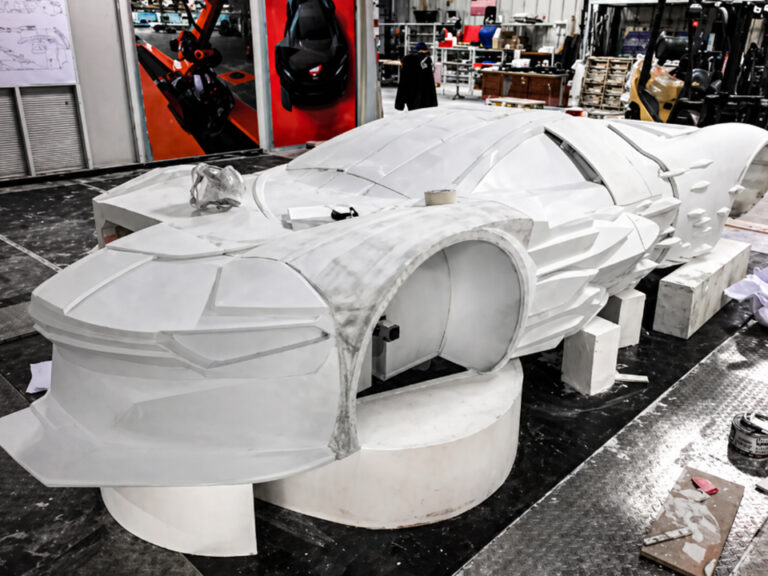
A shop needs a full-size car body model from foam. A 3-axis machine can rough it out, but steep side walls and flowing body lines create tool access problems. The operator must split the model, re-clamp sections, and finish by hand.
A 5-axis router handles the shape with better tool angle control. It keeps the cutter normal to the surface where needed. The surface comes off cleaner. The team spends less time sanding.
That’s real money.
A bent wood chair mold needs smooth curves, matching left and right sides, and clean transitions. A basic router can cut the easy areas, but the side curves and deep sections cause trouble.
A multi-axis setup reaches those zones without awkward repositioning. For furniture and decoration shops, this can turn a difficult custom job into repeatable production. Suntec’s About page says the company serves furniture, decoration, advertising, carpentry, mold making, and metal/non-metal processing. That mix fits this type of work well.
Composite molds punish sloppy surfaces. A small wave in the mold becomes a wave in the final part. A rough cut means more polishing. Poor repeatability means repair work.
A rigid 5-axis router with the right tooling can cut the mold closer to final shape. It won’t replace process control, but it reduces the handwork that eats profit.
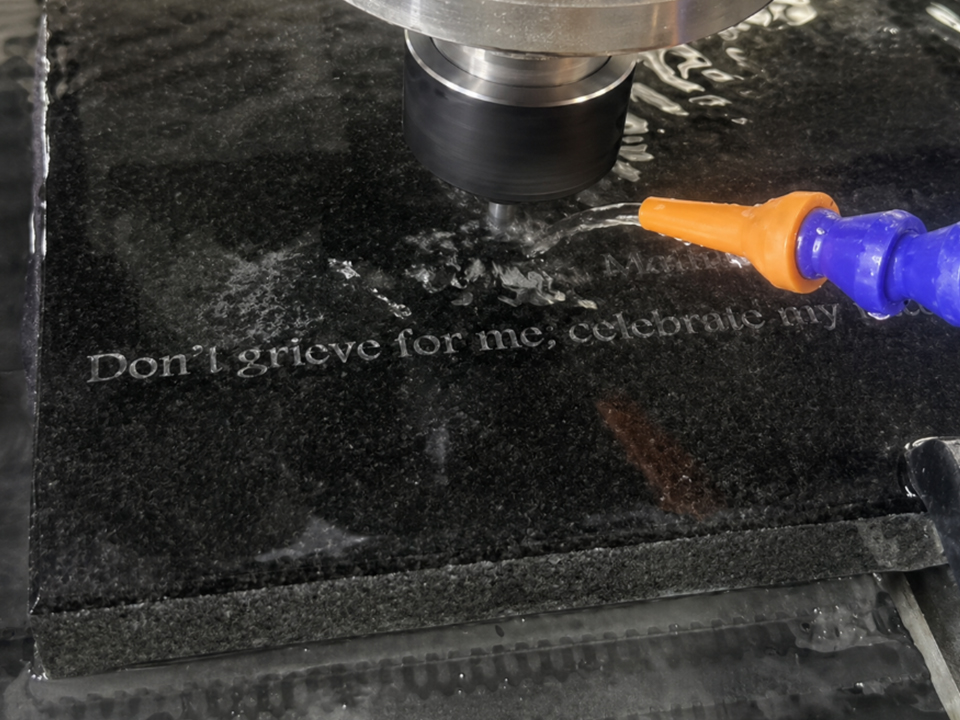
Some shops don’t cut one material all day. Monday is foam. Tuesday is hardwood. Wednesday is aluminum mold plate. Friday is plastic model work.
For that type of buyer, machine flexibility matters. Suntec’s custom CNC router product catalog gives buyers more than one route: 4-axis machines, 5-axis machines, nesting routers, robot machining, and automatic loading systems.
That matters because the best purchase may not always be the most expensive one. Sometimes a 4-axis router covers 80% of the work. Sometimes the 5-axis machine earns its place in six months. Sometimes automation makes more sense than another manual machine.
| Machine Type | Best For | Limits | Best Buyer |
|---|---|---|---|
| 3-axis CNC router | Flat panels, cabinets, signs, simple pockets | Poor access to deep curves and angled surfaces | Furniture panel shops, sign shops, basic production |
| 4-axis CNC router | Cylinders, molds, chair parts, foam models, curved work | Less flexible than full 5-axis | Mold shops, woodworking shops, model shops |
| 5-axis CNC router | Complex surfaces, angled cutting, aerospace-style molds, composite parts | Higher cost, higher skill demand | Shops making high-value complex parts |
| Nesting CNC router | Panel furniture, drilling, cutting, loading automation | Not built for deep 3D shapes | Cabinet and furniture production lines |
| Robotic CNC system | Large sculpting, trimming, automation tasks | Needs strong programming and process control | Advanced factories with mixed shapes |
This table shows why I don’t like simple buying advice.
“Buy 5-axis” is lazy.
A smart buyer starts with parts, not machine names. What size are the parts? What material? What tolerance? What surface finish? How many per month? How much handwork do you do now? Where does scrap happen?
Once you answer those questions, the machine choice becomes clearer.
Suntec CNC has been around since 2006. The company says it has 300 employees, 60 technical engineers, a 15,000㎡ total area, and customers in 100+ countries. That doesn’t prove every machine fits every buyer, of course. But it does show the company isn’t a tiny reseller with a borrowed catalog.
More important, Suntec builds across several CNC categories. That gives buyers room to compare.
If your shop cuts wood panels at volume, you may look at a nesting CNC router instead of jumping into 5-axis. If your work involves loading, drilling, nesting, and unloading, Suntec’s ST-2130 style automation setup may save more labor than a 5-axis head.
If your shop makes large molds, the 4-axis or 5-axis options deserve attention. If your parts have heavy angled surfaces, deep 3D curves, or complex trim paths, the 5-axis route becomes stronger.
That’s the useful part of Suntec’s lineup. It doesn’t force every problem into one machine box.
Don’t ask only for price.
Ask these questions:
That last point matters. A standard router may work for simple jobs, but high-precision parts often need custom fixtures, higher spindle specs, better dust control, stronger tables, or special software setup.
Suntec talks about agile customization and modular design on its company page. For buyers, that can be more useful than a long sales pitch. A machine that fits your part will always beat a machine that only looks good in photos.
So, is a 5-Axis CNC Router suitable for High-Precision Parts?
Yes.
But only when you define precision the right way.
For complex molds, foam models, composite tooling, hardwood shapes, aluminum molds, plastic fixtures, and large 3D parts, a strong 5-axis router can deliver serious value. It reduces setups. It reaches difficult angles. It cuts smoother surfaces. It helps shops move from hand-finishing to controlled machining.
But it’s not the answer to every precision problem. If your part needs heavy steel cutting or ultra-tight metal tolerances, be honest about that. Don’t buy axes. Buy capability.
That’s why Suntec CNC is worth checking before you decide. Start with the ST-2030 5-Axis CNC Router if your work needs full 5-axis movement. Compare it with Suntec’s 4-axis mold machines if your parts need rotary cutting but not full five-axis motion. Look at the nesting machines if your real bottleneck is panel production.
The best machine is not the one with the longest spec sheet.
It’s the one that cuts your parts cleanly, holds your tolerance, fits your workflow, and makes your shop easier to run.