Don't worry, contact your boss immediately
Don't rush to close it, now, please talk to our boss directly. Usually reply within 1 hour.

John
JINAN SUNTEC CNC Machinery Co., Ltd
We Use SSL/3.0 To Encrypt Your Privacy

Sculpture work has changed.
Not the art side. Not the eye for form. Not the hand that fixes a bad edge at the very end. What changed is the rough work, the setup work, and the time lost between idea and finished surface. That’s where CNC Routers stepped in, and that’s exactly why more Sculpture Studios now rely on 4 axis and 5 axis systems instead of forcing every job through slow manual carving or too many machine resets.
Here’s the blunt truth. A sculpture studio does not buy a router because it looks advanced. It buys one because time costs money, material costs money, and mistakes cost even more.
If you look at SUNTEC CNC, the pitch is not complicated. The company says its systems handle wood, stone, and metal, and it pushes the same point most real production shops care about: fewer setups, stable precision, and broader material range in one workflow. On the site, SUNTEC says it has been building CNC equipment since 2006, serves factories in 50+ countries, and offers 3-axis, 4-axis, and 5-axis solutions across multiple industries. That matters because sculpture studios rarely work with one material forever. One month it’s EPS foam. Next month it’s hardwood. Then it’s aluminum mold work or a stone pattern job.
Let’s start here.
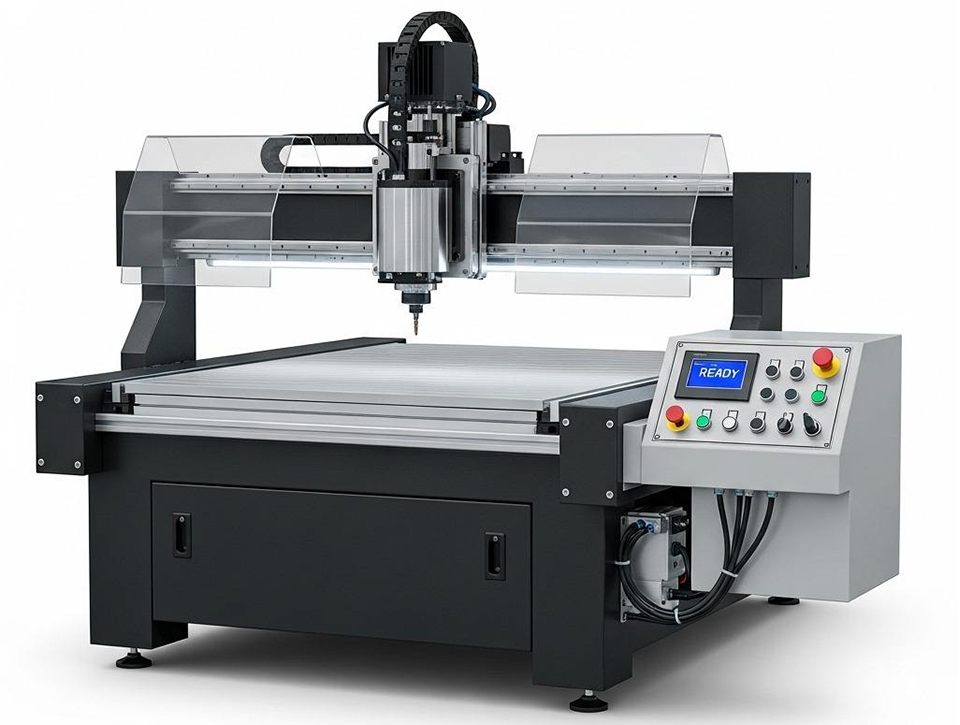
A lot of studios talk about 5 axis like it’s the only serious choice. I don’t buy that. For many sculpture shops, a 4 axis machine is still the smarter buy because most jobs do not need full multi-direction tilt and rotation. They need clean 3D cutting, stable repeat work, and a spindle that can approach curved surfaces without forcing endless repositioning.
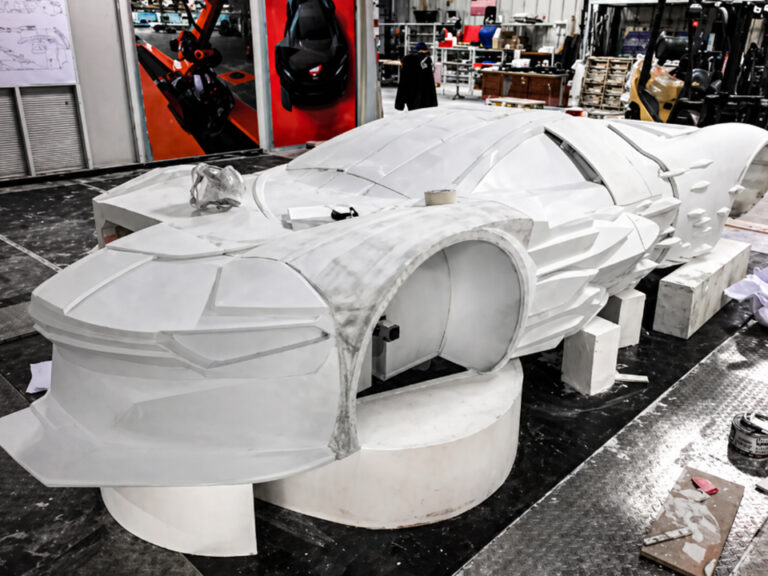
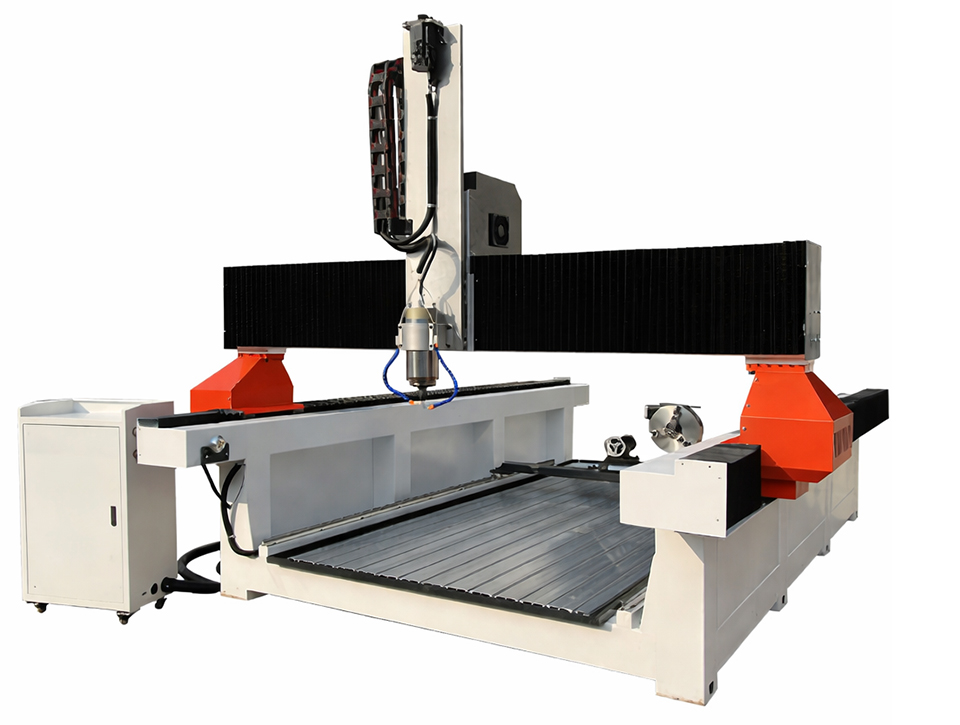
That is where a machine like the 4 axis CNC router car mold ST-2050 makes sense. On the product page, SUNTEC lists a 180° rotating HSD spindle, a 2000 × 5000 × 1000 mm working area, 40,000 mm/min rapid travel, and positioning accuracy at ±0.01/1000 mm. For sculpture studios doing large foam shapes, wood forms, cast patterns, and decorative models, that is not small talk. That is the difference between one setup and three.
And the same thing shows up on the 4 Axis 3D mold EPS CNC router ST-2030. That machine is built around foam, wood, and aluminum mold work, with the same 180° spindle swing, high-speed travel, and sub-0.01 mm positioning spec. If your studio makes full-size foam statues, relief blocks, mold masters, or large decorative parts, 4 axis is often enough. You don’t need to pay for movement you won’t use every day.
That’s the first hard point.
A 4 axis router works best when the part has deep surface detail but still follows a logic the spindle can reach without crazy undercuts. Busts. Relief sculpture. Foam molds. Decorative wood forms. Repeated production work. This is why pages like the 4 axis foam styrofoam EPS mold model and the 4 axis 3D wood mold ST-3040 matter on your site. They show the real use case: big, shaped, curved work that needs reach and speed, not just flat cutting.
Then the job gets harder.
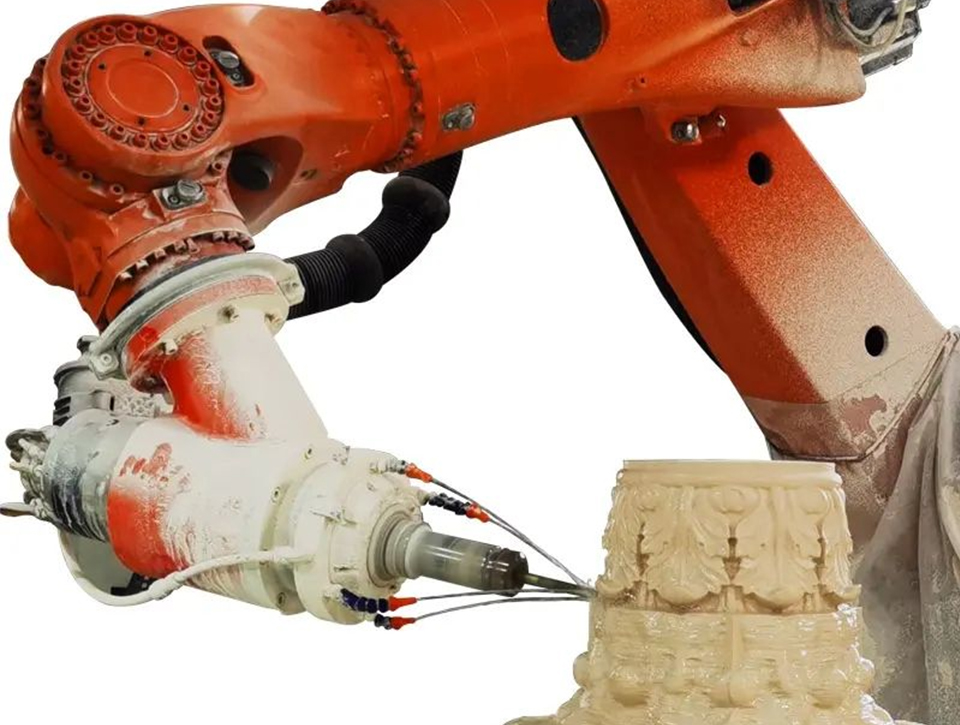
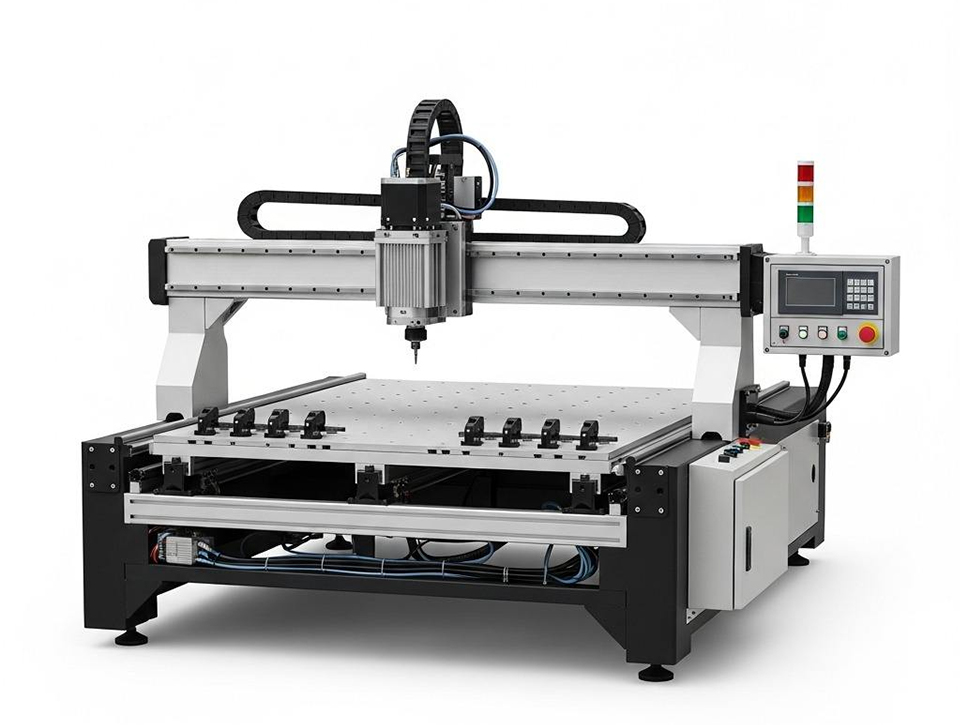
A sculpture studio moves into 5 axis when the shape gets awkward, the undercuts get real, and the cost of resetting the workpiece starts killing efficiency. That’s the simple version. If the tool has to approach from more than one angle to avoid hand rework, 5 axis starts paying for itself.
SUNTEC’s 5 Axis CNC Router category page makes that jump pretty clear. The machines listed there push A-axis motion up to ±110° and C-axis rotation up to ±245°, with models aimed at wood, composites, stone, aluminum, molds, and heavy industrial applications. That gives sculpture studios something 4 axis cannot always give them: better access to difficult geometry without flipping the work again and again.
Take the 5-Axis CNC router woodworking CNC machine center ST-2030. The page lists a 2000 × 3000 × 1000 mm work area, A-axis ±110°, C-axis ±245°, 24,000 RPM spindle speed, Yaskawa motors, and compatibility with Powermill and UG software. It also says the machine handles composite materials, fiberglass, carbon, EPS foam, styrofoam, plastic, aluminum, and hardwood. For a sculpture studio, that mix matters. One shop may rough statues in foam, refine parts in hardwood, and machine mold sections in composite. A flexible 5 axis system fits that kind of workload.
Now look at the stone and aluminum 5 axis router ST-2550. SUNTEC lists a 2500 × 5000 × 2000 mm capacity, 18 kW spindle power, ±0.01/2000 mm accuracy, and heavy-duty structure designed for 5–20 ton loads. That is the type of machine a studio looks at when the work is no longer “art only.” It becomes sculpture plus architecture, sculpture plus foundry pattern work, sculpture plus heavy mold production. And that is where many serious studios are headed.
The table below sums it up in plain language.
| Studio need | 4 Axis CNC Router | 5 Axis CNC Router |
|---|---|---|
| Best for | Foam, wood, basic 3D sculpture, mold work | Complex sculpture, undercuts, stone, aluminum, large patterns |
| Spindle movement | Rotating spindle for more surface reach | Multi-angle cutting from several directions |
| Setup count | Lower than 3 axis | Usually lowest on difficult parts |
| Learning curve | Easier | Higher |
| Cost | Lower entry cost | Higher, but better on complex work |
| Good fit for | Small to mid-size sculpture studios | Studios doing premium custom, heavy mold, or mixed-material work |
That is why the choice should not be emotional. It should be based on part geometry, material, finish demand, and how often the studio repeats the same type of work.
This part gets ignored.
A router does not make taste. It does not decide edge softness. It does not know when a face looks dead. It does not know when a fold in drapery needs more tension. It cuts. That’s its job.
But it can save huge amounts of time before the final hand finish starts.
That’s why I think the best way to sell CNC to sculpture studios is not “replace handwork.” That line is weak. The stronger line is this: use the machine for roughing, scaling, repeat work, symmetry control, and heavy stock removal, then let the sculptor spend energy where human judgment still matters most.
Your own site supports that argument well because it pushes machines built for range, not one narrow task. On the homepage, SUNTEC says its CNC systems support wood, stone, and steel, offers modular expansion from 3-axis to 5-axis, and claims precision around ±0.01 mm. It also says the company has expanded to a 15,000㎡ industrial park, added automated assembly lines, and built four dedicated labs with CE, FCC, and EMC certifications. Those points help sculpture studios feel they are buying from a manufacturer, not a trading shell with pretty product photos.
And that trust part matters.
Studios do not only buy a machine. They buy support, spare parts, response time, and the ability to get answers when a job is late and the spindle cannot wait. On the Contact page, SUNTEC offers direct phone, email, WeChat, and file upload for project inquiries. That is useful for sculpture shops because many projects are not standard. They need to send models, dimensions, and material details before they even ask for a quote.
Here’s my take.
If your studio mostly cuts EPS foam, wood blocks, and repeating 3D forms, start with a strong 4 axis system. You’ll spend less, train faster, and still cover a lot of sculpture work.
If your studio handles one-off showpieces, hard undercuts, foundry patterns, mixed materials, or premium custom jobs where finish quality and fewer setups matter more than entry cost, go 5 axis.
And don’t ignore workflow around the machine. SUNTEC’s own blog touches this from different angles. The article on 3-axis vs. 5-axis CNC Routers frames the tradeoff in simple terms: 5 axis costs more, but it reduces repositioning and improves access on complex parts. The post on energy-saving tips for high-axis CNC operations reminds buyers that machine performance is not just about cutting power. It’s also about operating cost. And the piece on advanced CNC router cutting techniques points straight at toolpath strategy, parameter control, and workholding. Those are the things that separate a clean result from a wasted block.
So yes, the machine matters.
But the full system matters more.
Sculpture studios use 4 axis and 5 axis CNC Routers for one basic reason: they need speed, scale, repeatability, and cleaner production without killing the art. A 4 axis machine handles a lot more sculpture work than people think. A 5 axis machine earns its keep when the shapes get harder and the resets get expensive.
That is the real divide.
If you want a simple way to position your brand, don’t overtalk it. Say this instead: SUNTEC gives sculpture studios a path from foam and wood carving to large mold and stone work, with real 4 axis and 5 axis options, broad material coverage, and direct factory support. That message fits the site. It also fits what buyers actually care about.