Don't worry, contact your boss immediately
Don't rush to close it, now, please talk to our boss directly. Usually reply within 1 hour.

John
JINAN SUNTEC CNC Machinery Co., Ltd
We Use SSL/3.0 To Encrypt Your Privacy

Three things matter.
In office furniture production, factories don’t lose money because a spindle turns too slowly once in a while. They lose money because parts drift, hole patterns move, labels get mixed, and one shift builds a desk side panel a little differently from the next shift. What does that do to lead time, rework, and trust?
I’ll be blunt. CNC Routers work best in Office Furniture Factories when they stop being “just machines” and start acting like process control tools. That’s the real value. A router doesn’t only cut MDF, plywood, particleboard, and laminated board. It locks a file, repeats a drilling pattern, follows the same nest, and keeps the same cut logic from the first sheet to the last.
That is also why this topic fits Suntec CNC so well. On its public site, Suntec says it was founded in 2006, works across furniture and other production sectors, and serves customers in more than 50 countries across 6 continents. That matters because office furniture buyers usually don’t need fancy talk. They need a supplier that understands repeat work, batch production, and line stability.
Fast cuts help.
But speed alone won’t save an office furniture factory when the real mess sits upstream in part programming, sheet layout, tooling changes, and human judgment, because one bad file can move through a whole batch before anyone catches it, and by then the line is already paying for scrap twice. Isn’t that the part people often ignore?
Take a simple office desk line. You have tops, side panels, back panels, shelves, modesty panels, and cable access holes. These parts look basic, but the production flow is not. The hole spacing has to match hardware. The grooves have to line up with assembly. The panel yield has to stay tight or the board cost eats the margin. The labels have to stay clean or packing falls apart.
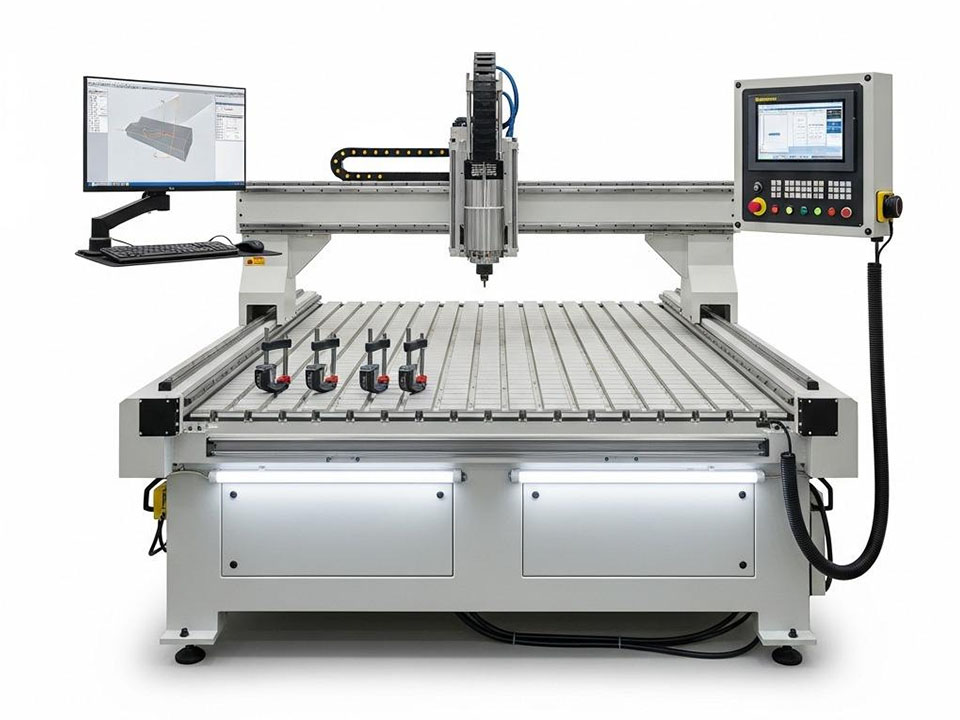
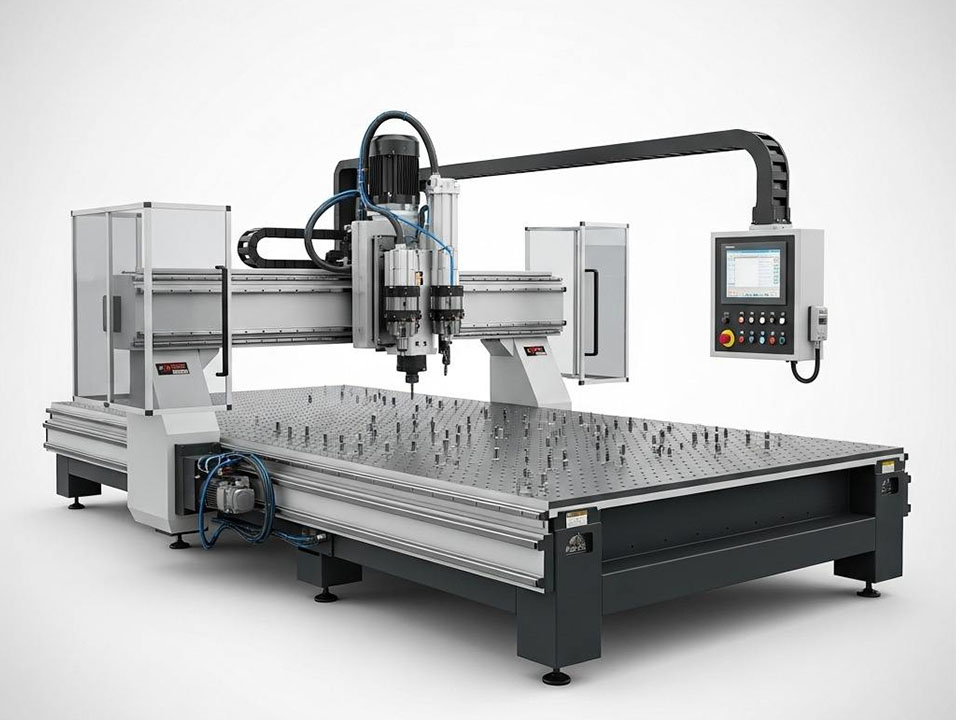
That’s where nesting CNC router systems make sense. On Suntec’s site, this category focuses on automated loading, nesting, drilling, and unloading, plus features like a 5-zone vacuum table, 12-tool ATC, and high running speed. Those are not cosmetic specs. They speak directly to repeatable panel work.
Not just cutting.
A well-set router cell standardizes how sheets enter the line, how parts are nested, how tools change, how holes are drilled, how grooves are cut, and how finished parts leave the table, which means fewer decisions get made in the heat of production and more decisions get made once, inside the process. Isn’t that how real factories get calmer?
Here is the simple version.
| Production point | Manual or loose process | Standardized CNC router process | Why it matters for office furniture |
|---|---|---|---|
| Sheet layout | Operator places parts by habit | Software nests parts by rule | Better board use and lower scrap |
| Drilling | Hole positions may drift | Program runs the same coordinates every time | Faster assembly and fewer fitting issues |
| Tool changes | Manual swaps slow the cycle | ATC keeps the tool order fixed | More stable cycle time |
| Part identity | Labels and part flow can get mixed | One digital file controls the run | Cleaner batching and packing |
| Edge finish | Finish quality depends on operator feel | Same toolpath and feed logic repeat | Less touch-up work |
| Multi-process flow | Cutting, drilling, and routing split across stations | One machine handles more of the work | Fewer handoffs and fewer errors |
The logic behind that table lines up with Suntec’s public product language. Its nesting pages describe full loading, nesting, drilling, and unloading cycles. The ST-1530 page also says the machine is built for nesting, routing, vertical drilling, cutting, side milling, and edge grinding in one setup for panel furniture, office furniture, and cabinets.
That’s the core point. Standardized production is not only about making the spindle move. It is about cutting down the number of “small decisions” on the floor. When fewer decisions float around, fewer mistakes slip through.
This is where it gets real.
If your factory makes workstations, storage units, filing cabinets, or meeting tables from sheet material, then the fight is usually about material use, process flow, and labor dependence, and that is exactly where a nested line earns its keep. Why keep treating flat-panel production like handcraft when the part family is already digital?
Suntec’s ST-1530 automatic feeding router is a good example to use in this discussion because the public page is clear about what the machine is trying to solve. The page highlights automated loading, nesting, drilling, and unloading. It also lists a 5-zone vacuum table, a 12-tool magazine, running speed up to 80 m/min, and precision at ±0.025 mm. Just as important, the page says it can raise material usage by 10% and reduce dependence on technical workers. For office furniture factories, those are the two lines that matter most.
I like that positioning because it stays close to factory reality. Most office furniture plants don’t need a machine that looks impressive in a showroom. They need one that helps them do these five things well:
Office furniture parts often start from standard sheets. So the bed size, vacuum zoning, and nesting logic matter from day one. If sheets shift, small tolerance issues turn into assembly headaches.
This matters more than many buyers admit. When one machine can cut outer profiles, handle vertical drilling, and do routing work in sequence, the line avoids extra transfers. Less handling usually means fewer mistakes.
This one is uncomfortable, but true. A lot of factories still rely too much on a few experienced operators. That works until one person leaves, gets sick, or makes a rushed change. A cleaner CNC process puts more knowledge in the program and less in memory.
A 10% material-use improvement sounds small until you scale it across months of MDF, plywood, or melamine board purchasing. On a busy office furniture line, that number gets expensive fast.
Office furniture orders often involve repeating dimensions, mirrored parts, or families of parts with small changes. A nested router line handles that far better than loose cutting plus manual drilling.
Suntec also has a broader nested-based CNC routing guide that explains why nesting software matters so much. The article talks about true-shape nesting, shared-line cutting, optimized toolpaths, remnant management, and the link between CAD data and machine control. That matters because a strong machine without strong nesting logic still leaves money on the table.
That order matters.
A lot of factories talk about customization first, but in office furniture, the smart move is usually the opposite: lock the repeat parts, stabilize the standard hole patterns, and only then layer on the special cutouts, shapes, and style details that buyers want. Why make the hard part harder?
Think about a typical office furniture range. The visible product mix may look wide. But the hidden structure is often tight. Many desks, benching systems, pedestals, lockers, and cabinets share board thickness, hardware logic, groove depth, and drilling patterns. That is why standardized production works so well with CNC Routers. The product family may look broad on the website, yet the machining logic stays narrow.
For that reason, I’d point readers to Suntec’s article on creating custom furniture with a 4-axis CNC router. Even though office furniture factories mostly live in the flat-panel world, the article makes a useful point: CNC routing increases output, cuts labor pressure, and helps manufacturers shift dimensions and shapes more easily when custom work enters the schedule. It also notes that nesting software helps raise material use and lower waste. That’s not only about artistic furniture. It also fits reception desks, curved counters, shaped meeting tables, and special front panels.
So, no, I don’t think every office furniture factory needs to jump straight into more complex axes. But I do think they should stop pretending that all products are “special” when most of their profit still sits in standard repeat parts.
This choice matters.
Too many buyers jump from “we need a CNC router” to “let’s buy the biggest model we can afford,” even though the better question is what kind of furniture mix, sheet size, edge detail, drilling load, and output volume the line actually has to carry every day. Isn’t machine fit more important than machine hype?
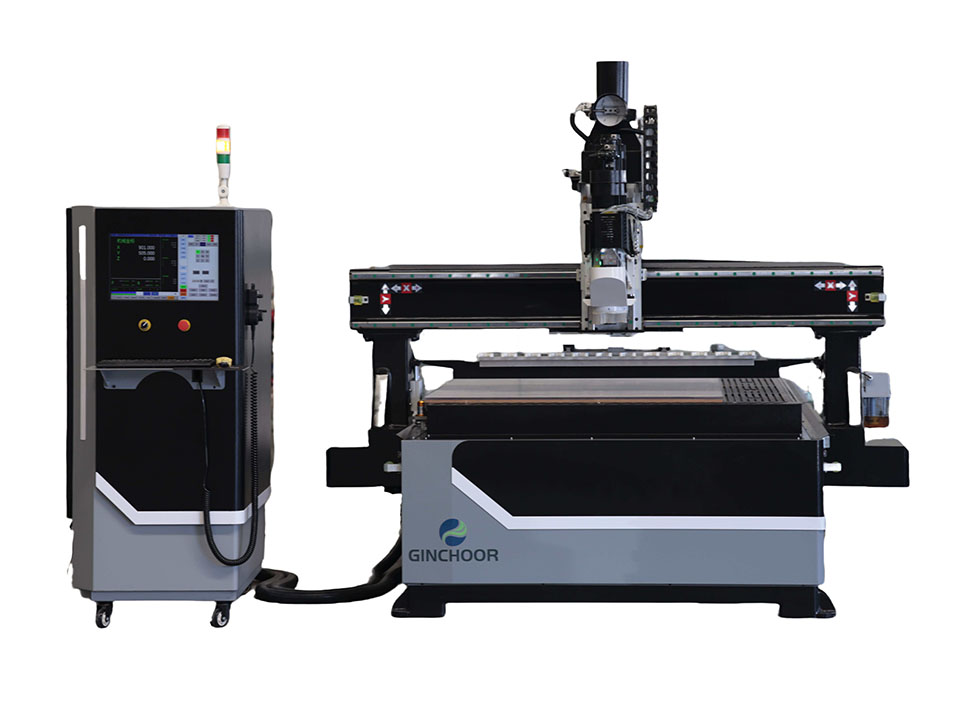
For most office furniture factories, a solid 3-axis or nesting-focused setup will cover a large share of daily work. That includes panel cutting, drilling, slotting, pocketing, and routing for standard desks, cabinets, and storage units. If the factory also produces shaped edges, more detailed contours, or special design pieces, then more advanced motion may start to make sense.
That’s where Suntec’s 3-axis vs. 5-axis router guide helps. The article frames the tradeoff in a practical way: 3-axis machines suit straightforward jobs, while 5-axis setups open the door to more complex geometry and fewer setups for difficult parts. For office furniture factories, the lesson is simple. Don’t overbuy for plain rectangular panels. But don’t underbuy if your product line keeps drifting toward shaped, angled, or premium custom work.
If buyers want a wider view, the full product catalog is useful because it shows the broader machine range and also signals a manufacturing mindset built around industrial components such as HSD, Yaskawa, and Syntec. On Suntec’s product pages, those names show up again and again next to precision claims and heavy-duty frame details. That doesn’t replace due diligence, but it does tell buyers what kind of machine class the company wants to compete in.
Plain answer.
A supplier fits office furniture production when it understands panel flow, nesting, tooling, repeat work, and after-sales support, not when it throws the most technical terms at the buyer and hopes nobody asks hard questions. Isn’t that what serious factories really care about?
Suntec’s public site leans into that industrial angle. The company says it has deep experience in furniture and other sectors, and it presents its nesting systems around the exact pain points office furniture plants deal with every day: material use, labor dependence, tooling automation, and stable flow. The ST-1530 page goes even further by naming office furniture production directly, which is a good sign because it shows the sales message is tied to a real use case, not a vague promise.
I also like that the case is easy to explain without dressing it up. If your plant cuts panel-based office furniture, then a machine that combines loading, nesting, drilling, and unloading already speaks your language. If your orders include both standard ranges and shaped details, then Suntec’s content around 3-axis, 4-axis, and 5-axis setups gives you a cleaner way to match the machine to the work.
That’s how buyers should read the site. Not as a pile of product pages. As a map of production problems.
Keep it simple.
CNC Routers help Office Furniture Factories standardize production because they turn repeat parts into repeat code, repeat nests, repeat drilling, and repeat output, and once that happens the factory stops depending so much on memory, improvisation, and luck. Isn’t that the whole point of modern manufacturing?
If you want a cleaner office furniture line, start with the boring questions. How stable is your nesting? How often do hole patterns drift? How much board do you waste? How many steps still depend on a few people? How often do you move a part from one station to another just to finish work that should have stayed in one flow?
That is where the value sits.
And if you want to push that conversation with a supplier that already talks in terms of nesting, automation, furniture production, and industrial machine build, it makes sense to browse Suntec’s nesting CNC router category, review the ST-1530 automatic feeding router, and then contact the Suntec team with your sheet size, product mix, and output target. Their public contact page lists direct channels, including phone and email, which makes the next step pretty straightforward.