Don't worry, contact your boss immediately
Don't rush to close it, now, please talk to our boss directly. Usually reply within 1 hour.

John
JINAN SUNTEC CNC Machinery Co., Ltd
We Use SSL/3.0 To Encrypt Your Privacy

Let’s get straight to it.
Most EPS foam mold factories do not need a 5-axis machine on day one. They need a machine that cuts clean foam, stays accurate over long hours, handles big blocks without drama, and doesn’t turn every new job into a programming headache. That’s why this question matters so much. A CNC Router is not just a machine choice. It’s a production choice, a staffing choice, and a profit choice.
I’ll say it plainly. If your shop mainly cuts open surfaces, large 3D shapes, car molds, pattern work, or repeat foam jobs, a 4-axis machine is usually the smarter buy. If your work keeps pushing into deep cavities, hard-to-reach angles, multi-face machining, and tighter finish demands, then yes, 5-axis starts to make real sense.
And this is exactly why I like how Suntec CNC presents its lineup. The company has been building CNC equipment since 2006, and it does not box buyers into one machine type. It offers both 4-axis and 5-axis options, plus custom configurations, so an EPS Foam Mold Factory can match the machine to the work instead of forcing the work to fit the machine. You can see that across the About Suntec page and the full product range.
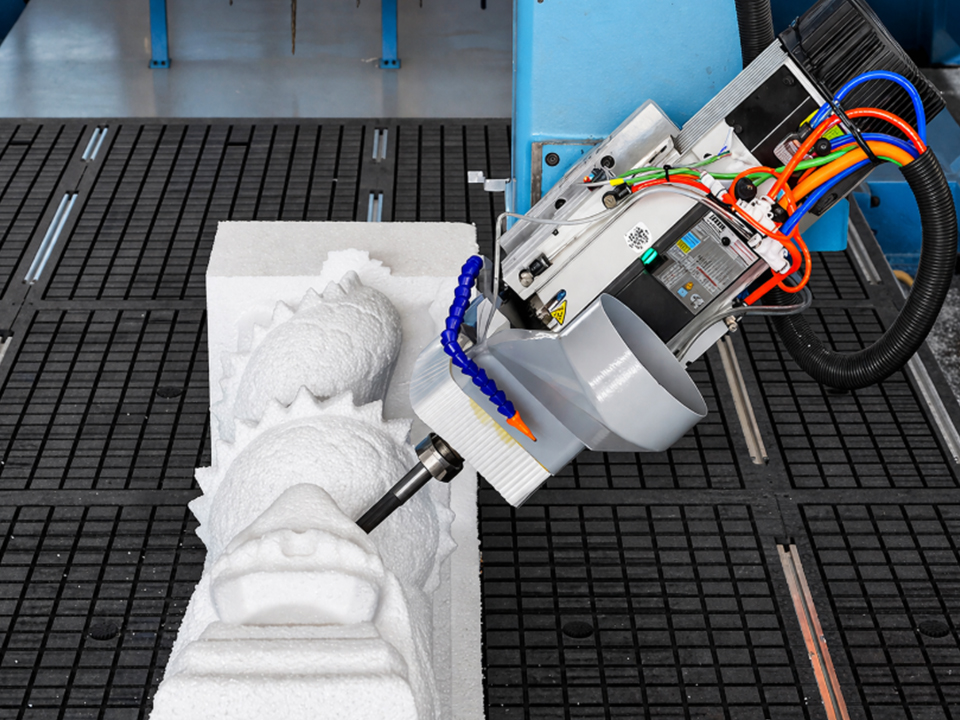
This is where buyers get it wrong.
They look at axis count first. I think that’s backwards. You should look at the part first. What are you actually cutting every week? Big EPS blocks for styling models? Foam molds with wide, flowing surfaces? Boat plugs? Car body shapes? Or parts with side walls, undercuts, deep recesses, and surfaces that are painful to finish by hand?
That one question will save you money.
A 4-axis CNC Router already covers a lot of real EPS work. Suntec’s 4 axis CNC router foam styrofoam eps mold ST-1325 uses a spindle that can rotate 180 degrees, which means it can machine many multi-surface foam shapes without stepping into full 5-axis cost and complexity. Suntec also pairs that with HSD spindle options, Syntec control, Delta inverter, Yaskawa servo motors, and Hiwin/PMI linear components, which tells me the machine is built for steady industrial use, not just light demo work.
Now look one level up. The 4 Axis 3d mold EPS CNC Router ST-2030 keeps the same 180° spindle concept, and Suntec lists 40 m/min speed with ±0.01 mm precision. For a factory cutting foam molds, wood patterns, and even some aluminum mold-related work, that is a serious middle ground. Fast enough to keep production moving. Accurate enough for demanding mold jobs. Simple enough that your team won’t spend half the week fighting software.
Here’s the hard truth.
A lot of EPS factories buy too much machine.
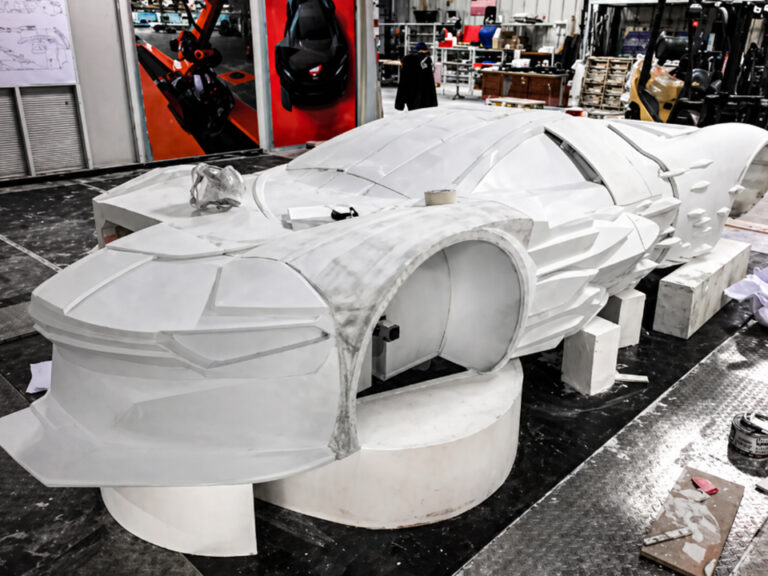
If your jobs are mostly large foam forms, car molds, pattern shapes, and broad 3D surfaces, a 4-axis machine often gives you the best return. You get more reach than a basic 3-axis machine, better surface handling, and less manual repositioning. But you don’t pay the full price in programming time, training load, and machine complexity that comes with 5-axis.
That matters more than people admit.
Take large-format mold work. Suntec’s 4 axis CNC router swing 180 degree rotary spindle 3d wood mold ST-3040 offers a 3×4 meter work area, a 180° HSD spindle, 40 m/min speed, and ±0.01 mm precision. For big foam molds, long pattern sections, marine shapes, and oversized mock-up work, that machine solves a very common factory problem: part size. Not every shop needs more axis. Many shops need more table, more stability, and clean 3D motion across large blocks.
I’ve seen this logic play out again and again in mold work. The bottleneck is often not “we need simultaneous 5-axis motion.” It’s “we need stable cutting on a big piece without wasting time on weak setups.” A larger 4-axis machine fixes that faster than a fancy machine that sits half-used.
And there’s another point buyers miss. A 4-axis CNC Router is usually easier to train, easier to quote, and easier to keep busy. That matters in a real factory. Machines don’t make money because they are advanced. They make money because they stay loaded.
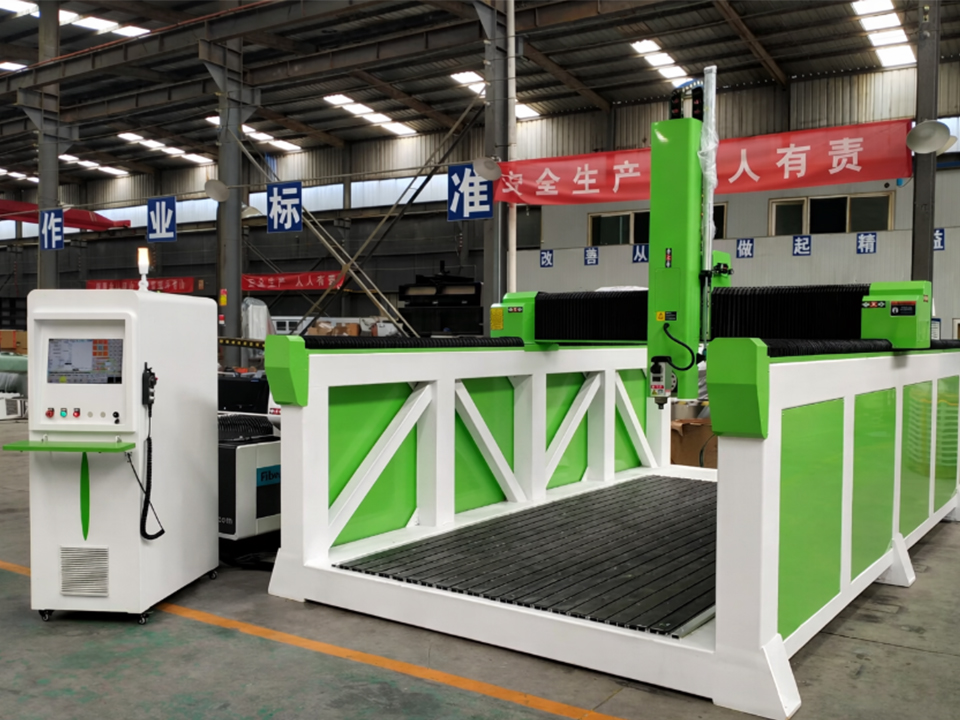
Now the other side.
Some jobs really do need 5-axis. Not because it looks impressive. Because the part geometry leaves you no clean way out.
If your EPS Foam Mold Factory handles deep cavities, angled features, multi-face parts, tricky internal curves, composite trimming, or molds where long tools and repeated setups keep ruining finish and lead time, a 5-axis machine starts to earn its keep. At that point, you are not buying extra motion for show. You are buying access.
Suntec’s 5-Axis CNC router woodworking CNC machine center ST-2030 is built for that level of work. The page lists A-axis rotation of ±110° and C-axis rotation of ±245°, a 2000 × 3000 × 1000 mm working area, HSD spindle speed up to 24,000 RPM, 40 m/min rapid speed, and ±0.01 mm precision. Suntec also notes applications in EPS foam, styrofoam, fiberglass, carbon-related composite work, plastic, aluminum, hardwood, wood mold, car mold, boat and yacht mold parts, and other non-metal mold jobs. That tells you exactly where 5-axis starts to make sense: complex geometry, hard angles, and parts that punish repeated re-clamping.
So yes, I’ll be blunt again. If your operators keep saying, “We can cut it, but we’ll need to flip it, blend it, and fix it by hand,” your shop is already paying for 5-axis. You’re just paying in labor instead of equipment.
Forget the hype. Look at the fit.
| Option | Best for | Useful Suntec model | Key data | What you gain | What to watch |
|---|---|---|---|---|---|
| 4-axis, compact | Small to mid-size EPS foam molds, open 3D surfaces, repeat jobs | ST-1325 | 180° spindle swing; HSD, Syntec, Yaskawa components | Lower cost, easier training, flexible foam machining | Less efficient on deep or hard-angle parts |
| 4-axis, larger format | Big molds, car patterns, marine or long foam sections | ST-2030 / ST-3040 | 40 m/min; ±0.01 mm; 180° rotating spindle; up to 3x4m area on ST-3040 | Strong value for large mold work without 5-axis cost | Still limited on undercuts and full multi-face access |
| 5-axis | Deep cavities, angled surfaces, undercuts, multi-side mold work | ST-2030 5-axis | A ±110° / C ±245°; 2000×3000×1000 mm; 24,000 RPM; 40 m/min; ±0.01 mm | Better reach, fewer setups, cleaner complex machining | Higher machine cost, higher CAM and operator demand |
The point is not that one machine is always better. The point is that one machine is usually better for your job mix. And that is why I’d tell any buyer to compare the 4-axis EPS mold options against the 5-axis lineup only after reviewing actual part drawings, actual block sizes, and actual finishing hours.
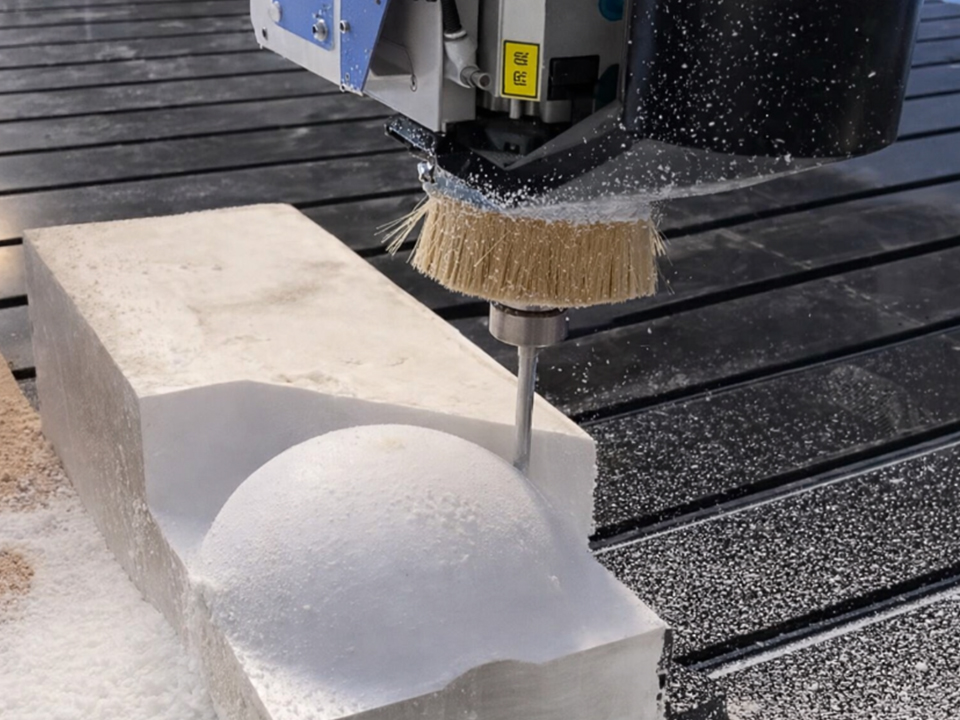
Here it is.
If your factory mostly produces standard EPS foam molds, car styling forms, large profiles, and open-surface 3D work, buy a 4-axis CNC Router first. It is the safer investment. It is easier to run. And in many shops, it will do far more work than people expect.
But if your orders are moving toward complex mold geometry, deeper detail, tighter turnaround, and less hand finishing, then a 5-axis machine is not overkill. It is the right tool.
That’s why Suntec is in a good position for buyers here. The company doesn’t just have one answer. It has a path. You can start with a proven 4-axis model like the ST-1325, move into a larger 4-axis platform like the ST-2030 or ST-3040, or go straight to 5-axis when the work justifies it. And because Suntec builds custom CNC equipment, the conversation can stay focused on your mold size, your material, your finish target, and your output plan, not on a one-size-fits-all sales pitch.
Simple.
Pull your last 50 foam mold jobs. Check how many needed extra setups. Check how many needed hand repair after machining. Check how many parts were limited by machine angle, tool reach, or bed size. Then match that list against Suntec’s full CNC Router catalog. If most of your work is straightforward, stay practical and go 4-axis. If complex parts keep eating your time, move to 5-axis with your eyes open.
And if you want to stop guessing, just go straight to the contact page and send Suntec your part size, material, and drawing type. That’s the fastest way to choose the right machine for your EPS Foam Mold Factory, without paying for features you won’t use or cutting corners you’ll regret later.